





 English
 русский
 中文简体
中文简体Content
- 1 Understanding Drum Gear Couplings in Heavy Industrial Drive Systems
- 2 Structural Composition and Working Principle
- 3 Why Drum Gear Couplings Are Suited for Heavy Loads
- 4 Misalignment Compensation in Real Operating Conditions
- 5 Lubrication and Enclosure Design
- 6 Typical Applications in Heavy Industry
- 7 Selection Considerations for Industrial Drive Systems
- 8 Role of Drum Gear Couplings in Long-Term System Reliability
Understanding Drum Gear Couplings in Heavy Industrial Drive Systems
Drum gear couplings are widely used in heavy industrial drive systems where high torque transmission, compact structure, and reliable misalignment compensation are required. Compared with standard flexible couplings, drum gear couplings feature crowned gear teeth that allow smoother engagement under load, making them suitable for continuous-duty equipment such as rolling mills, crushers, conveyors, and large pumps. Their structural characteristics make them a common choice in steel, mining, cement, and power generation industries.
Structural Composition and Working Principle
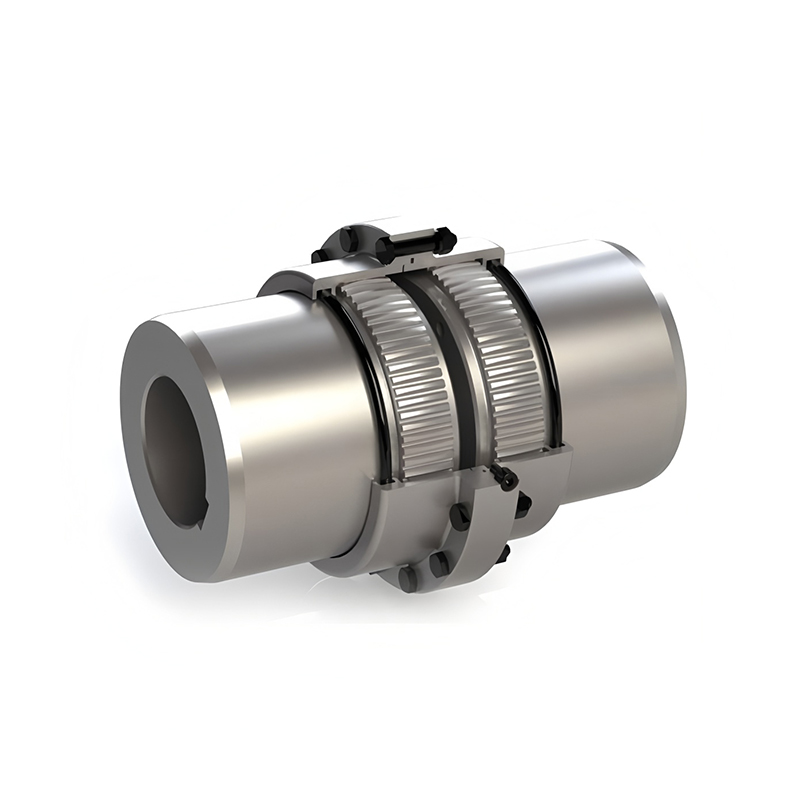
A typical drum gear coupling consists of two hubs with external gear teeth and two sleeves with matching internal teeth. One side usually adopts a drum-shaped or crowned tooth profile, which is the key difference from straight-tooth gear couplings. This design allows the coupling to maintain stable contact even when shaft misalignment occurs during operation.
Torque is transmitted through the meshing of the gear teeth. During rotation, the crowned tooth geometry permits slight angular displacement between shafts while distributing load evenly across the tooth surface, reducing edge contact and localized stress. This contributes to smoother power transmission and longer service life under heavy loads.
Why Drum Gear Couplings Are Suited for Heavy Loads
Heavy industrial drive systems often operate under fluctuating torque, shock loads, and harsh environmental conditions. Drum gear couplings address these challenges through their mechanical strength and tooth design.
- High torque capacity achieved through full-tooth engagement and large contact area.
- Crowned teeth reduce sensitivity to installation errors and operational shaft movement.
- Robust materials and heat-treated components support long-term operation under high stress.
Misalignment Compensation in Real Operating Conditions
In large-scale machinery, perfect shaft alignment is difficult to maintain due to thermal expansion, foundation settlement, and load variation. Drum gear couplings are designed to accommodate angular, parallel, and limited axial misalignment without interrupting torque transmission.
The crowned gear tooth profile plays a central role by allowing the sleeves to slide slightly over the hub teeth during rotation. This reduces additional forces transmitted to bearings and shafts, helping maintain system stability in long-running industrial processes.
Lubrication and Enclosure Design
Lubrication is critical to the performance of drum gear couplings. Because torque is transmitted through sliding gear tooth contact, grease or oil lubrication is required to minimize wear and heat generation. Most designs use sealed covers with gaskets or O-rings to retain lubricant and protect internal components from dust and moisture.
In heavy industrial environments, proper lubrication management directly affects service life. Many manufacturers provide customized sealing and lubrication solutions to match specific operating speeds, temperatures, and contamination levels encountered on site.
Typical Applications in Heavy Industry
Drum gear couplings are commonly integrated into drive systems where equipment size and transmitted power exceed the limits of general-purpose couplings. Typical applications include:
- Rolling mills and continuous casting lines in steel plants.
- Crushers, ball mills, and conveyor drives in mining operations.
- Large fans, pumps, and compressors in cement and power generation facilities.
Selection Considerations for Industrial Drive Systems
Selecting a drum gear coupling involves evaluating torque requirements, shaft dimensions, allowable misalignment, operating speed, and environmental conditions. Industrial users often prioritize load capacity and durability, while also considering ease of maintenance and replacement.
Manufacturers with experience in heavy-duty coupling solutions typically offer design support, material options, and customized configurations to align with real operating conditions. This engineering-oriented approach helps ensure that the coupling integrates effectively into complex drive systems without compromising reliability.
Role of Drum Gear Couplings in Long-Term System Reliability
In heavy industrial drive systems, unplanned downtime leads to significant operational losses. Drum gear couplings contribute to system reliability by maintaining stable torque transmission under demanding conditions and reducing stress on connected components.
When properly selected, installed, and maintained, drum gear couplings form a dependable mechanical link that supports continuous operation. This is why they remain a core component in modern heavy industry, where performance consistency and structural robustness are critical factors in equipment design and operation.
 Previous