






 English
 русский
 中文简体
中文简体
RSK-LT Easy Installation elastic sleeve pin coupling with pins and elastic bushings
It is a non-metallic flexible element coupling that transmits torque through pins and elastic bushings. Its core working principle utilizes the compre...
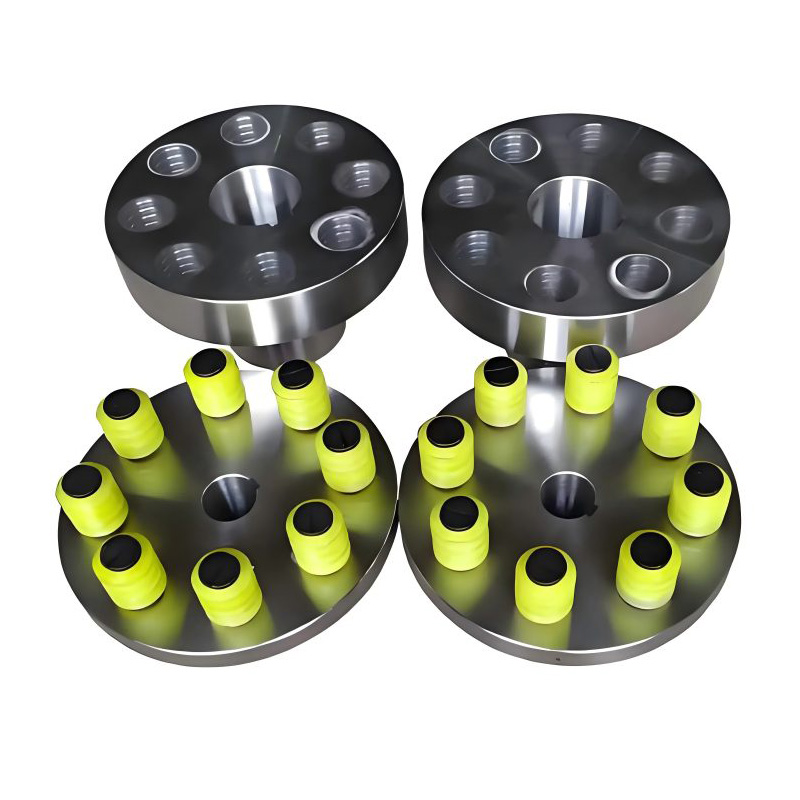
It is a non-metallic flexible element coupling that transmits torque through pins and elastic bushings. Its core working principle utilizes the compre...
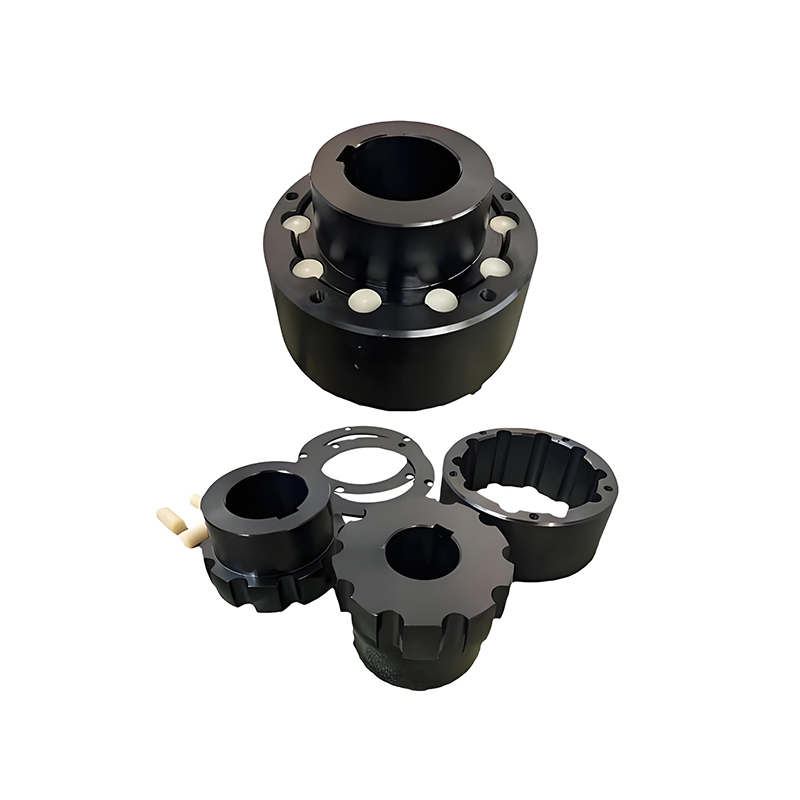
Crowned/Straight Gear Mesh: Used to transmit high torque and provide large-angle, large-displacement compensation capability. Flexible Pin Assembly: T...
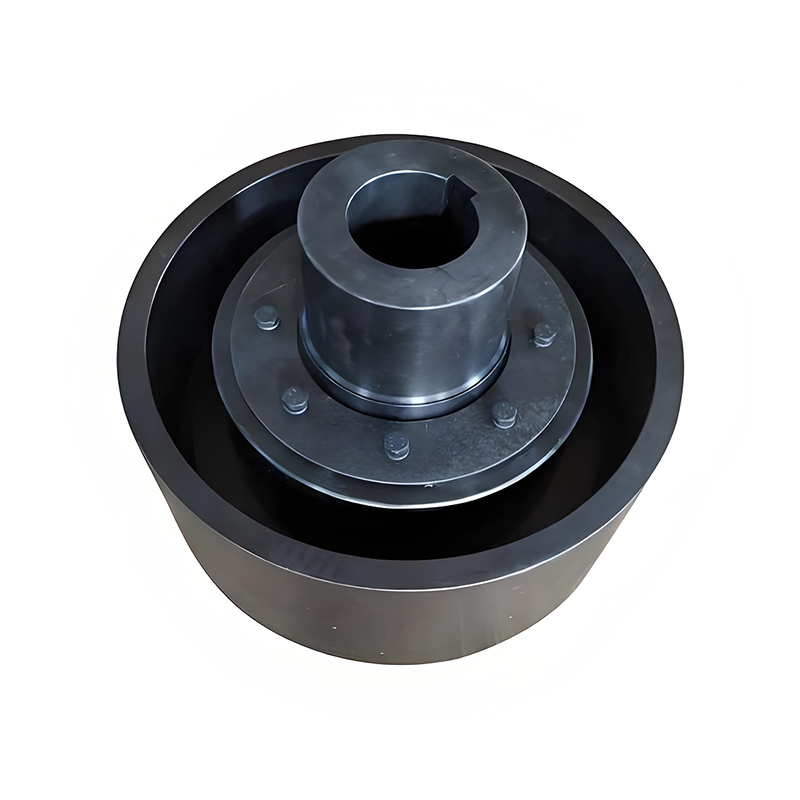
Basic Structure Brake Wheel Half-Coupling: This is its distinctive component. Typically made of cast steel to ensure sufficient strength and wear resi...
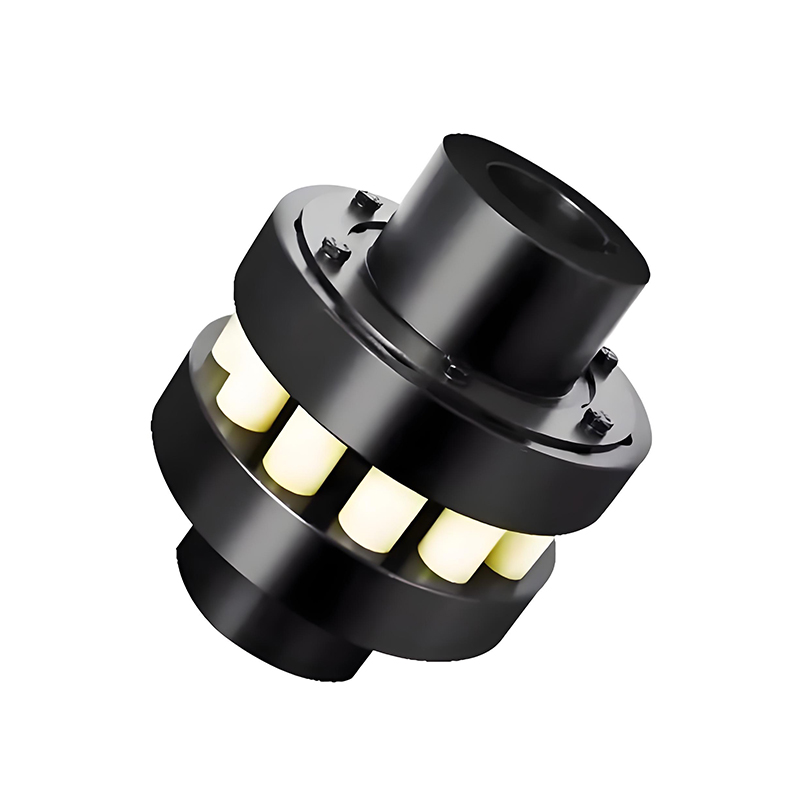
The core characteristic of the RSK-lx type is: The pins themselves (nylon components) serve as the primary load-bearing members for torque, while the ...
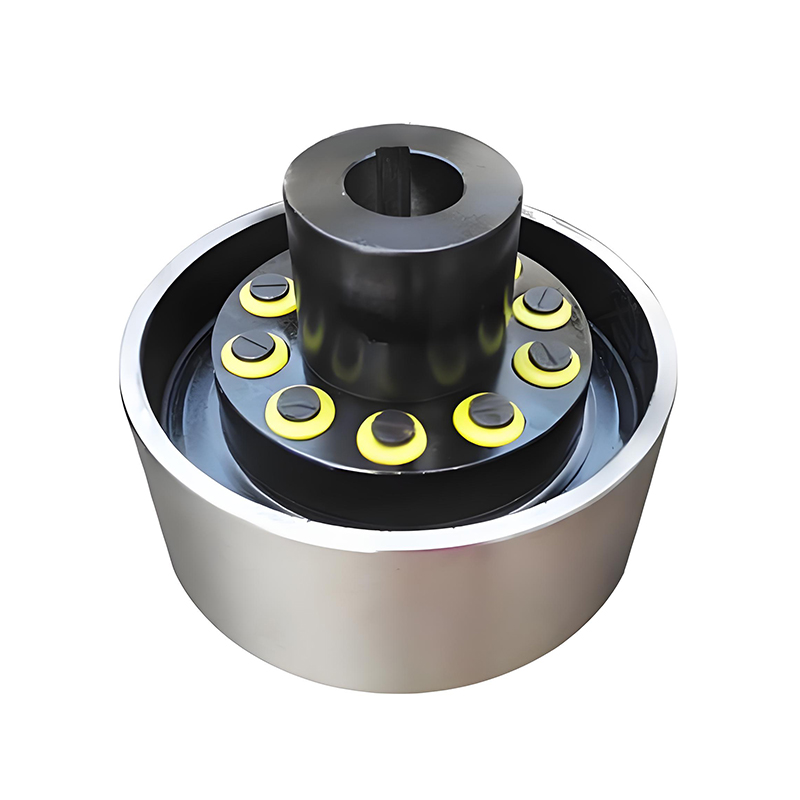
Basic Structure The RSK-ltz type can be viewed as a functional composite of a "Type RSK-ltz Coupling" and a "Brake Wheel". Its main components include...
An elastic pin coupling(Pin &bush coupling) connects two rotating shafts, using non-metallic elastic pins (often nylon) in holes between two coupling halves to transmit torque while absorbing shock, dampening vibrations, and compensating for minor axial, radial, and angular shaft misalignment, making it great for medium-speed, low-impact applications like cranes, offering simplicity and easy replacement of the elastic pins.
How it works
Components: Two metal semi-couplings with aligned flange holes and several elastic pins (often with sleeves).
Connection: The pins pass through the holes in both coupling halves, linking the shafts.
Torque Transmission: Power is transferred as the pins' elastic material deforms (shears or compresses) under load, transferring torque from one shaft to the other.
Misalignment Compensation: The flexibility of the elastic pins allows for small movements, accommodating slight shaft misalignments.
Key advantages
Simple Design: Easy to manufacture, assemble, and maintain.
No Lubrication: Typically requires no lubrication.
Shock Absorption: Dampens shock and vibration, protecting machinery.
Easy Maintenance: Elastic pins can be replaced without moving the connected shafts
Best suited for
Medium speed, low-to-medium torque applications.
Machinery where minor misalignment is expected, like cranes, conveyors, and general industrial equipment.
Limitations
Not for High Impact: Not ideal for heavy shock, vibration, or high-reliability drives (like main hoist shafts) due to the elastic element's wear.
A roller press in a cement plant and a 200 W servo axis on a packaging line both get described as a flexible drive shaft coupling. They are not the same component, and treating them as interchangeable is how shafts end up overloaded, bearings fail early, and a machine runs louder than it did on the day it was commissi...
READ MOREThree disc packs failed in fourteen months on the same 250 kW compressor, and each time the maintenance crew replaced the coupling. The cause was 0.9 mm of axial growth that nobody had budgeted for. After alignment, the pack had less than 0.5 mm of axial capacity left, so every hot start pushed the stainless laminatio...
READ MORE1. Customer & Equipment Overview The customer is a large heavy-duty building materials enterprise with a 24-hour continuous production line for ore crushing and aggregate conveying. The faulty equipment is the main drive system of the belt conveyor, equipped with a 132 kW motor. A ball cage universal coupling is ad...
READ MOREElastic pin couplings are widely recognized for their ability to transmit torque while compensating for slight misalignments between shafts. Unlike rigid couplings, their unique pin-and-elastomer design absorbs shock loads, reduces vibration, and minimizes wear on connected equipment. In our projects, I’ve seen how proper selection of pin material and elastomer hardness can dramatically extend the service life of high-speed machinery.
The pins in elastic pin couplings are typically made of high-strength steel, while the bushes are elastomeric. Choosing the correct combination affects torque capacity, misalignment tolerance, and damping characteristics. For instance:
Regular inspection of pins and bushes is essential to prevent unexpected downtime. Look for cracks, elongation, or hardness changes in the elastomer. In our manufacturing experience, coupling failure often occurs due to improper alignment or overload conditions. By pairing elastic pin couplings with precise shaft alignment tools, we ensure optimal performance for long-term operations.
Pin & bush couplings are a robust solution for high-torque applications, especially in metallurgical, mining, and engineering machinery. The metal-to-metal pin engagement provides excellent torque capacity, while the elastomeric bush cushions vibrations. I’ve often recommended our couplings as replacements for foreign brands due to their consistent performance and international-level quality standards.
Pin & bush couplings are well-suited for environments with heavy loads, high temperatures, or fluctuating torque. Their design allows:
Although both coupling types share similarities, key differences affect application choice. The table below summarizes important parameters:
| Feature | Elastic Pin Coupling | Pin & Bush Coupling |
|---|---|---|
| Torque Capacity | Medium to High | High to Very High |
| Vibration Damping | Excellent | Good to Excellent |
| Misalignment Tolerance | Moderate | Low to Moderate |
| Best Application | High-speed rotating equipment | Heavy-load machinery and mining equipment |
In our work with military ships, armored vehicles, and railway locomotives, I’ve found that selecting the right coupling design significantly affects efficiency and maintenance cycles. Combining elastic pin couplings or pin & bush couplings with precision-engineered shafts ensures smooth torque transmission, reduced vibration, and minimized mechanical failures.
Current R&D trends focus on hybrid designs that blend elastomer damping with reinforced metallic pins, as well as advanced simulations to predict fatigue life under complex loading. Our company continues to innovate in this field, developing couplings for screw pumps, double-speed coaxial systems, and other specialized applications. I personally guarantee that our products deliver reliable performance under even the most demanding conditions.
Get in Touch
Your email address will not be published. Required fields are marked *
Have a project in mind? Contact with us!
We are happy to answer your questions. Please fill out this form and one of our professional team will get back to you as soon as possible.

A professional manufacturer specializing in the production of various types of couplings! Elastic Pin Coupling Manufacturers in China.

