





 English
 русский
 中文简体
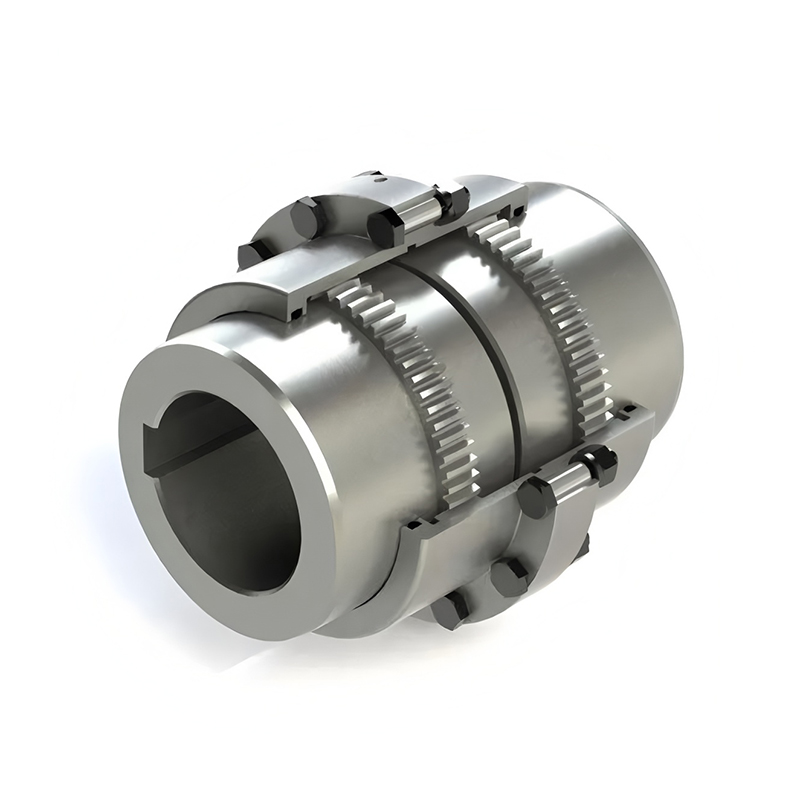
中文简体Gear couplings remain the industry standard for high-torque power transmission in heavy industrial applications due to their exceptional durability and ability to accommodate significant misalignment. Unlike flexible elastomeric couplings, gear couplings transmit torque through interlocking teeth, allowing them to handle loads exceeding 1,000,000 Nm in large-scale setups. Their primary advantage lies in their compact design relative to their torque capacity and their tolerance for angular misalignment up to 0.5 degrees and parallel misalignment up to 0.25 mm, provided they are properly lubricated and maintained.
Content
Mechanical Design and Operational Principles
Understanding the internal mechanics of gear couplings is essential for selecting the right type for specific operational conditions. The design focuses on maximizing tooth contact area while minimizing friction.
Hub and Sleeve Configuration
A typical gear coupling consists of two hubs with external gear teeth and a floating sleeve with internal teeth. The hubs are mounted on the driving and driven shafts, while the sleeve connects them. This design allows for axial movement, accommodating thermal expansion of the shafts. The teeth are typically crowned, meaning they have a slightly curved profile. This crowning is critical as it allows the coupling to operate smoothly even when misaligned, preventing edge loading that could lead to premature tooth failure.
Material Selection and Hardness
Gear coupling hubs are commonly manufactured from forged steel, such as AISI 4140 or 4340, to ensure high tensile strength. The teeth undergo heat treatment, typically carburizing or induction hardening, to achieve a surface hardness of 55-60 HRC. This hardness level provides resistance to wear and pitting while maintaining a tough core to absorb shock loads. Sleeves are often made from similar materials but may have different heat treatment specifications to balance hardness and ductility.
Lubrication Strategies for Longevity
Lubrication is the most critical factor in the lifespan of a gear coupling. Without proper lubrication, the metal-to-metal contact between teeth generates excessive heat and wear, leading to rapid failure.
Grease vs. Oil Lubrication
Most industrial gear couplings use grease lubrication due to its ease of application and sealing capabilities. High-quality lithium complex or polyurea-based greases with EP (Extreme Pressure) additives are recommended. Oil lubrication is reserved for high-speed applications exceeding 3,000 RPM, where grease churning can cause overheating. Oil systems require more complex sealing arrangements but offer superior cooling and flushing of wear particles.
Relubrication Intervals
Relubrication frequency depends on operating conditions. For standard applications running at moderate speeds and temperatures, relubrication every 6 to 12 months is typical. However, in harsh environments with high temperatures or contamination risks, intervals may need to be shortened to 3 months. Always purge old grease completely during relubrication to prevent the buildup of degraded lubricant and abrasive particles.
Misalignment Capabilities and Limits
While gear couplings are designed to handle misalignment, exceeding their limits significantly reduces service life. Understanding these limits is crucial for installation and maintenance.
| Misalignment Type | Maximum Limit | Impact on Life |
|---|---|---|
| Angular | 0.5 degrees | High angular misalignment increases tooth sliding velocity and wear |
| Parallel | 0.25 mm (0.010 in) | Causes cyclic bending stresses in the shafts and hub teeth |
| Axial | Depends on size | Excessive axial movement can disengage teeth or damage seals |
It is important to note that these limits are not additive. If angular misalignment is present, the allowable parallel misalignment decreases. Precision alignment during installation using laser tools is recommended to minimize dynamic loads and extend coupling life.
Maintenance and Failure Prevention
Proactive maintenance is key to preventing unexpected downtime. Regular inspections can identify issues before they lead to catastrophic failure.
- Vibration Analysis: Monitor vibration levels regularly. An increase in vibration, particularly at 1x or 2x running speed, can indicate misalignment, wear, or looseness.
- Thermal Imaging: Use infrared thermography to detect hot spots on the coupling housing. Elevated temperatures often signal lubrication breakdown or excessive friction due to misalignment.
- Seal Inspection: Check seals for leaks during every maintenance interval. Leaking seals allow contaminants to enter and lubricant to escape, accelerating wear. Replace seals if any signs of degradation are visible.
- Tooth Wear Inspection: During major overhauls, inspect gear teeth for pitting, spalling, or wear patterns. Uniform wear is normal, but localized wear indicates misalignment or overload conditions.
 Previous