





 English
 русский
 中文简体
中文简体Content
Understanding the Serpentine Spring Coupling
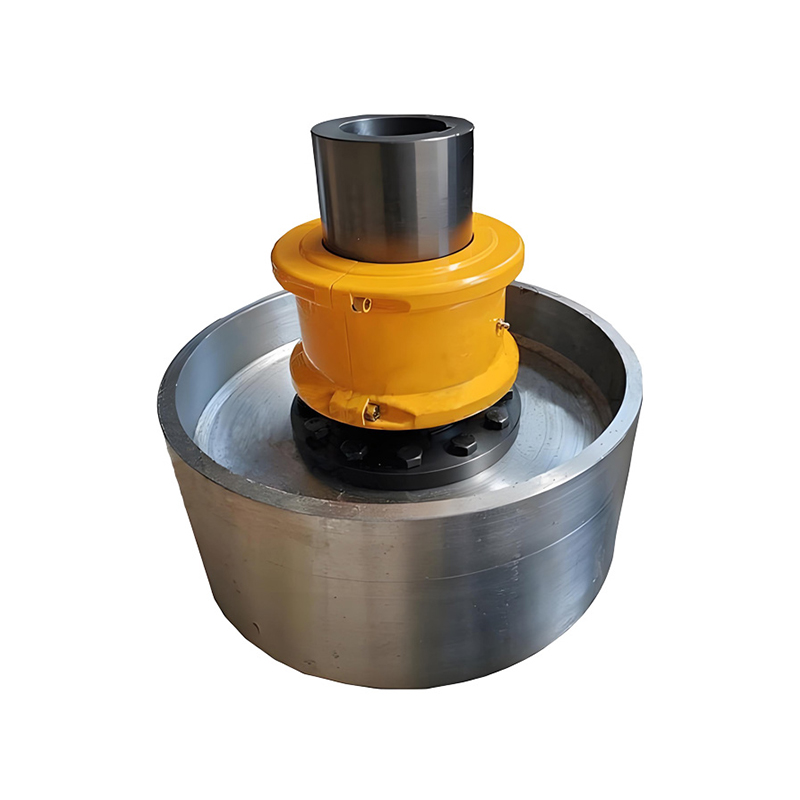
A serpentine spring coupling is a specialized mechanical device designed to connect two rotating shafts while accommodating misalignment and absorbing vibrational shocks. Unlike rigid couplings, it utilizes a series of interlocking, wave-shaped metal springs to transmit torque flexibly.
These couplings are particularly valued in heavy-duty industrial applications where shock load absorption and maintenance-free operation are critical. Their unique design allows for angular, parallel, and axial misalignment without significant wear, making them a reliable choice for demanding environments.
Key Design Features and Mechanics
The core functionality of a serpentine spring coupling lies in its distinct structural elements:
Interlocking Spring Elements
The coupling consists of two hubs with external teeth that mesh with a central flexible element made of high-strength steel springs arranged in a serpentine pattern. This design allows the springs to flex under load, distributing stress evenly across the component.
Lubrication-Free Operation
Most modern serpentine spring couplings are designed to operate without lubrication. The metal-to-metal contact is minimized by the spring's flexing action, reducing friction and eliminating the need for regular greasing, which lowers maintenance costs significantly.
Advantages Over Traditional Couplings
Choosing a serpentine spring coupling offers several distinct benefits compared to gear or jaw couplings:
- High Shock Absorption: The spring structure dampens sudden torque spikes, protecting connected motors and gearboxes from damage. Tests show they can absorb up to 30% more shock energy than standard elastomeric couplings.
- Misalignment Compensation: They effectively handle angular misalignment up to 1.5 degrees and parallel misalignment up to 1.5mm, depending on the size.
- Long Service Life: Made from durable alloy steels, these couplings resist fatigue and corrosion, often lasting the lifetime of the machinery with proper installation.
- No Backlash: The tight meshing of the spring elements ensures precise torque transmission with minimal backlash, crucial for positioning accuracy.
Common Industrial Applications
Serpentine spring couplings are versatile and found in various sectors:
| Industry | Application Example | Benefit |
|---|---|---|
| Mining | Conveyor Drives | Handles high start-up torque and shock loads |
| Steel Production | Rolling Mills | Resists extreme heat and heavy vibrations |
| Power Generation | Generator Sets | Ensures smooth power transmission and alignment tolerance |
| Marine | Propulsion Systems | Corrosion-resistant options available for saltwater environments |
Installation and Maintenance Guidelines
Proper installation is crucial for maximizing the performance of serpentine spring couplings:
- Alignment Check: Although they tolerate misalignment, initial shaft alignment should be within manufacturer specifications (typically < 0.5mm parallel and < 0.5 degrees angular) to prevent premature fatigue.
- Hub Installation: Ensure hubs are securely keyed and set-screwed to the shafts. Use a torque wrench to tighten fasteners to the recommended values.
- Spring Element Insertion: Carefully insert the serpentine spring pack between the hubs, ensuring all teeth engage fully without forcing.
- Regular Inspection: While lubrication-free, visually inspect the springs every 6–12 months for signs of cracking, corrosion, or excessive wear. Replace the spring pack if any defects are found.
Selecting the Right Coupling
When choosing a serpentine spring coupling, consider the following factors:
Torque Requirements
Calculate the maximum operating torque and peak shock loads. Select a coupling with a rated torque capacity at least 1.5 times the nominal motor torque to ensure a safety margin.
Environmental Conditions
For corrosive environments, opt for stainless steel or coated spring elements. In high-temperature settings, verify the material's thermal stability limits.
Space Constraints
Serpentine couplings are generally compact. Measure the available axial and radial space to ensure the selected model fits without interfering with surrounding components.
Conclusion
Serpentine spring couplings offer a robust, low-maintenance solution for connecting rotating machinery in challenging industrial environments. Their ability to absorb shock, compensate for misalignment, and operate without lubrication makes them superior to many traditional coupling types.
By understanding their design advantages and adhering to proper installation practices, engineers and maintenance teams can enhance equipment reliability, reduce downtime, and extend the operational life of critical drive systems.
 Previous