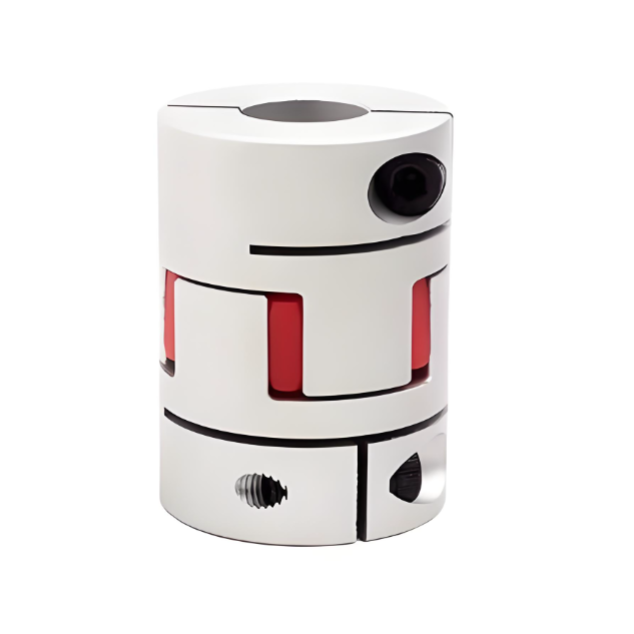
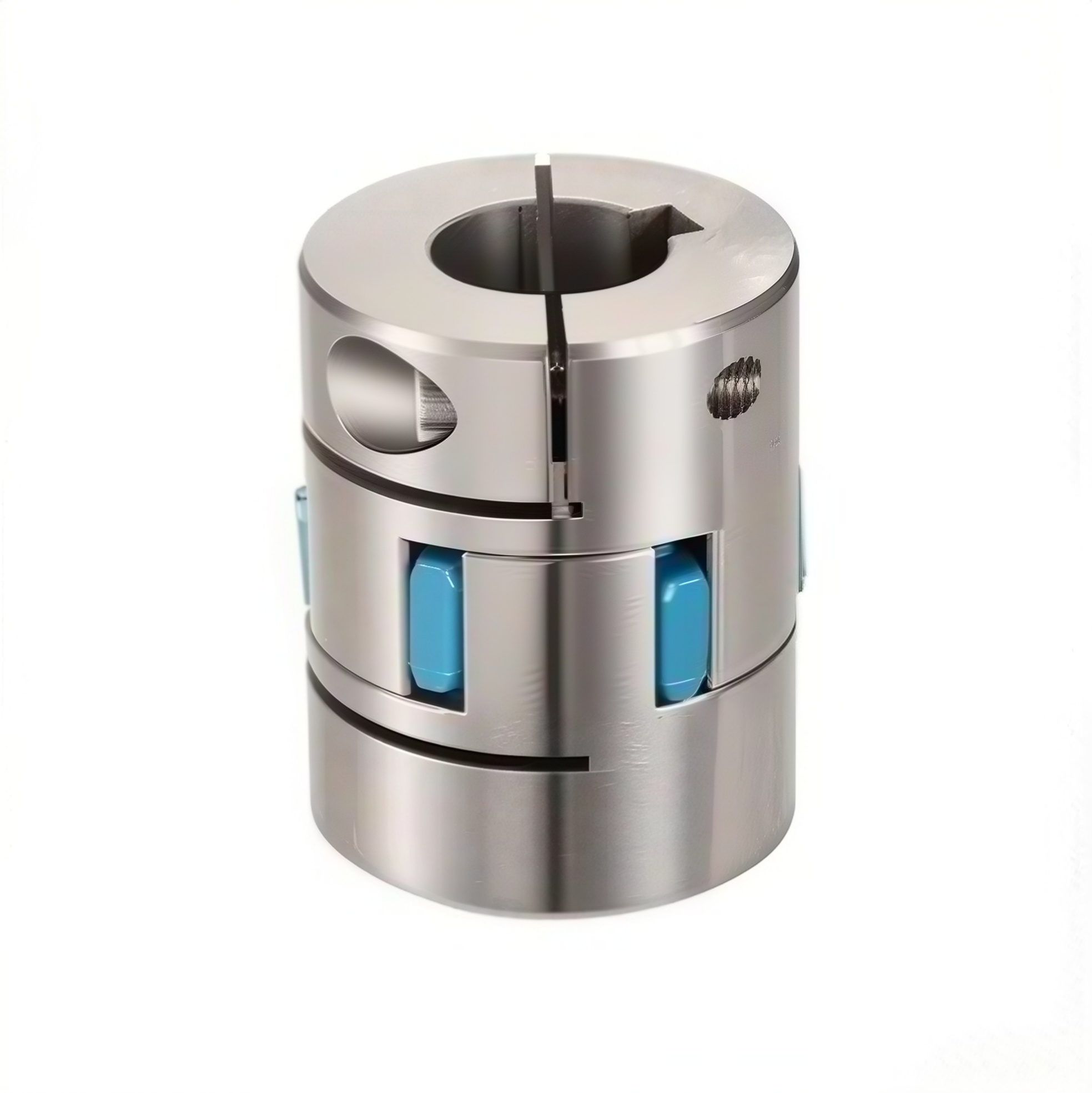
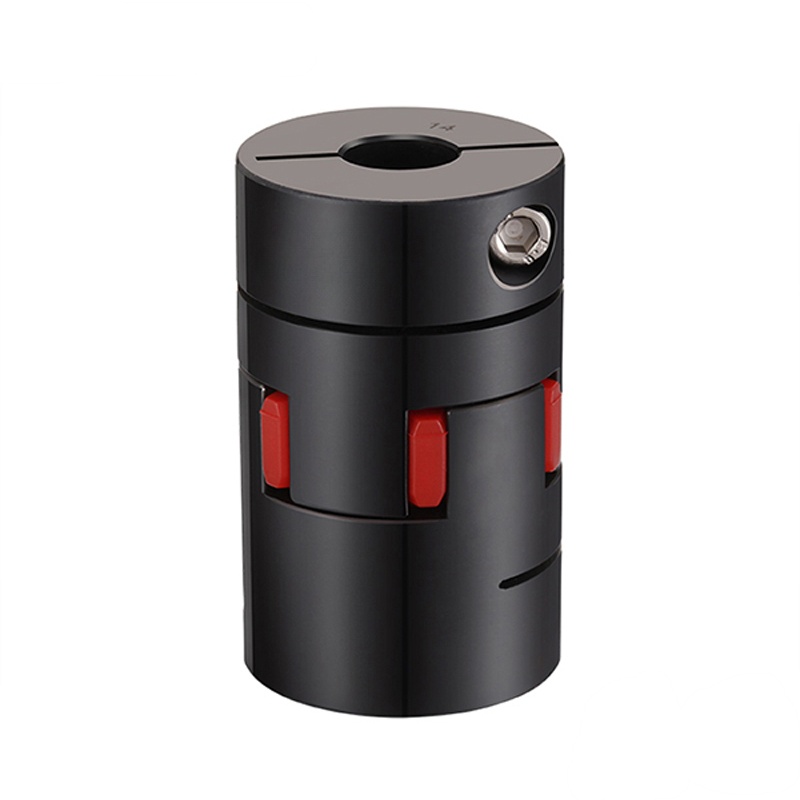
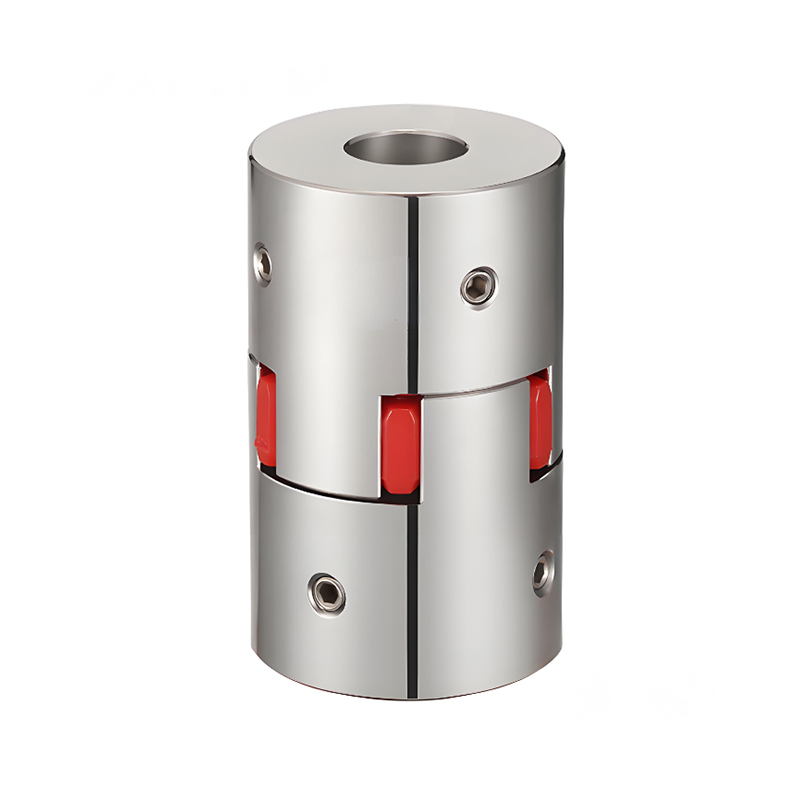
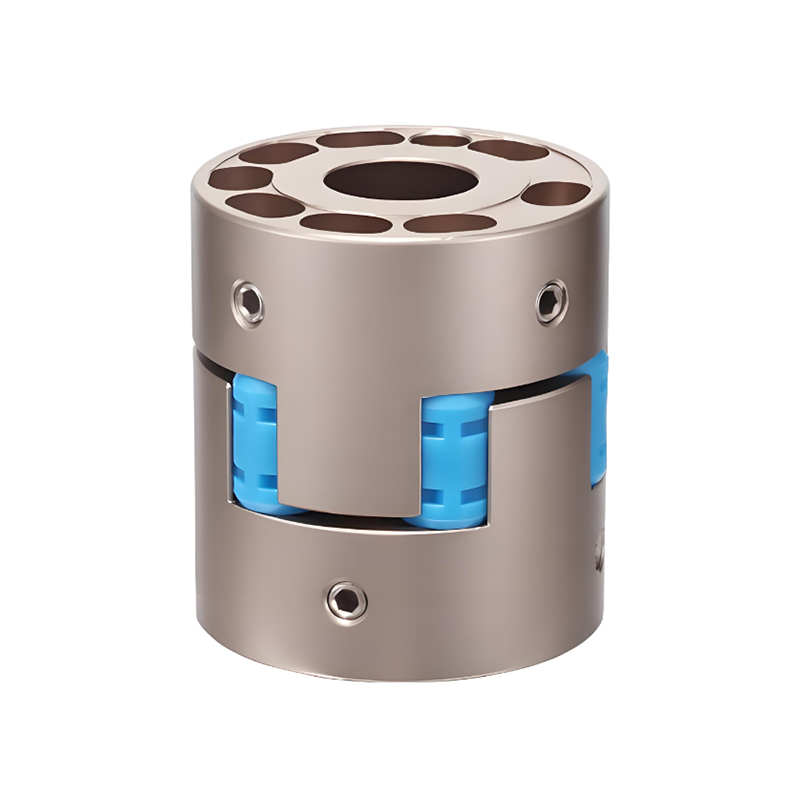
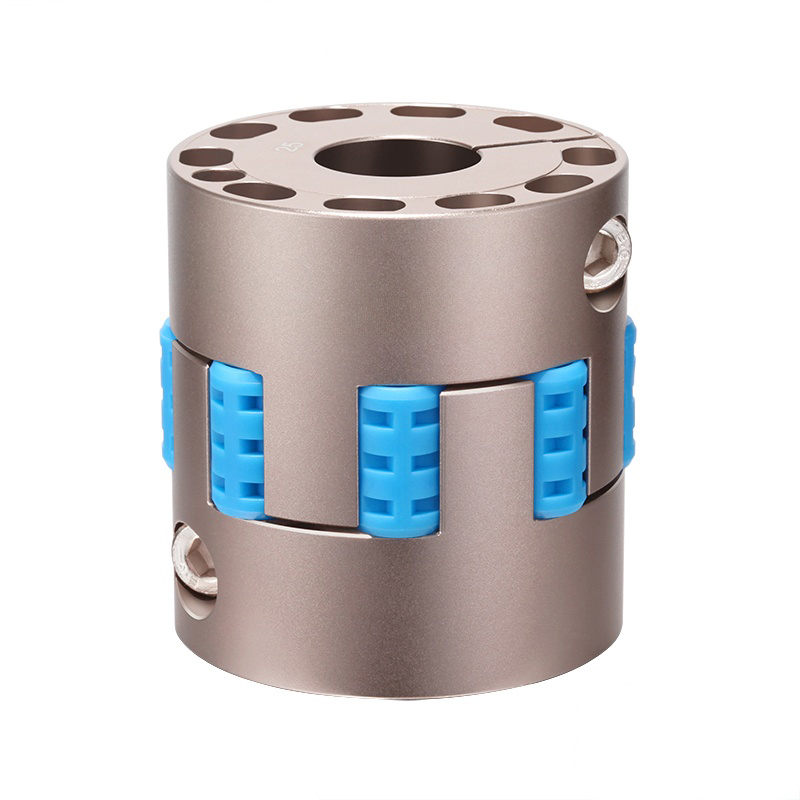
A jaw spider coupling is a popular power transmission device with two hubs featuring "jaws" that mesh with an elastic, often star-shaped insert called a "spider," transmitting torque while absorbing shock, dampening vibration, and accommodating misalignment (angular, parallel, axial) between shafts, making it a flexible, failsafe component for various industrial machines. The spider's material (e.g., polyurethane) and hardness dictate torque capacity, damping, and performance, allowing for customization.
Components & Function
T Hubs: Two metallic hubs with protruding jaws (lugs) that fit around the spider.
Spider: An elastomeric (rubber or polyurethane) insert fitting between the jaws, acting as the flexible link.
Torque Transmission: Torque is transferred through the spider's lobes in compression from one hub's jaws to the other.
Misalignment: Accommodates angular, parallel, and axial shaft misalignment.
Vibration Damping: The elastomeric spider absorbs shocks and vibrations, protecting connected equipment.
Fail-Safe: If the spider fails, the hubs' jaws interlock for direct, though potentially temporary, power transmission, allowing safe shutdown.
Spider Types & Performance
Hardness: Softer spiders offer greater damping and flexibility (e.g., blue, 85 Shore A), while harder ones provide higher torque and stiffness (e.g., red, 98 Shore A).
Materials: Common materials include polyurethane (PU) and various rubbers, with hardness impacting load capacity.
Applications
General industrial machinery
Pump & conveyor drives
Food processing
Machine tools
Servo & motion control systems (curved jaw type)





 English
 русский