





 English
 русский
 中文简体
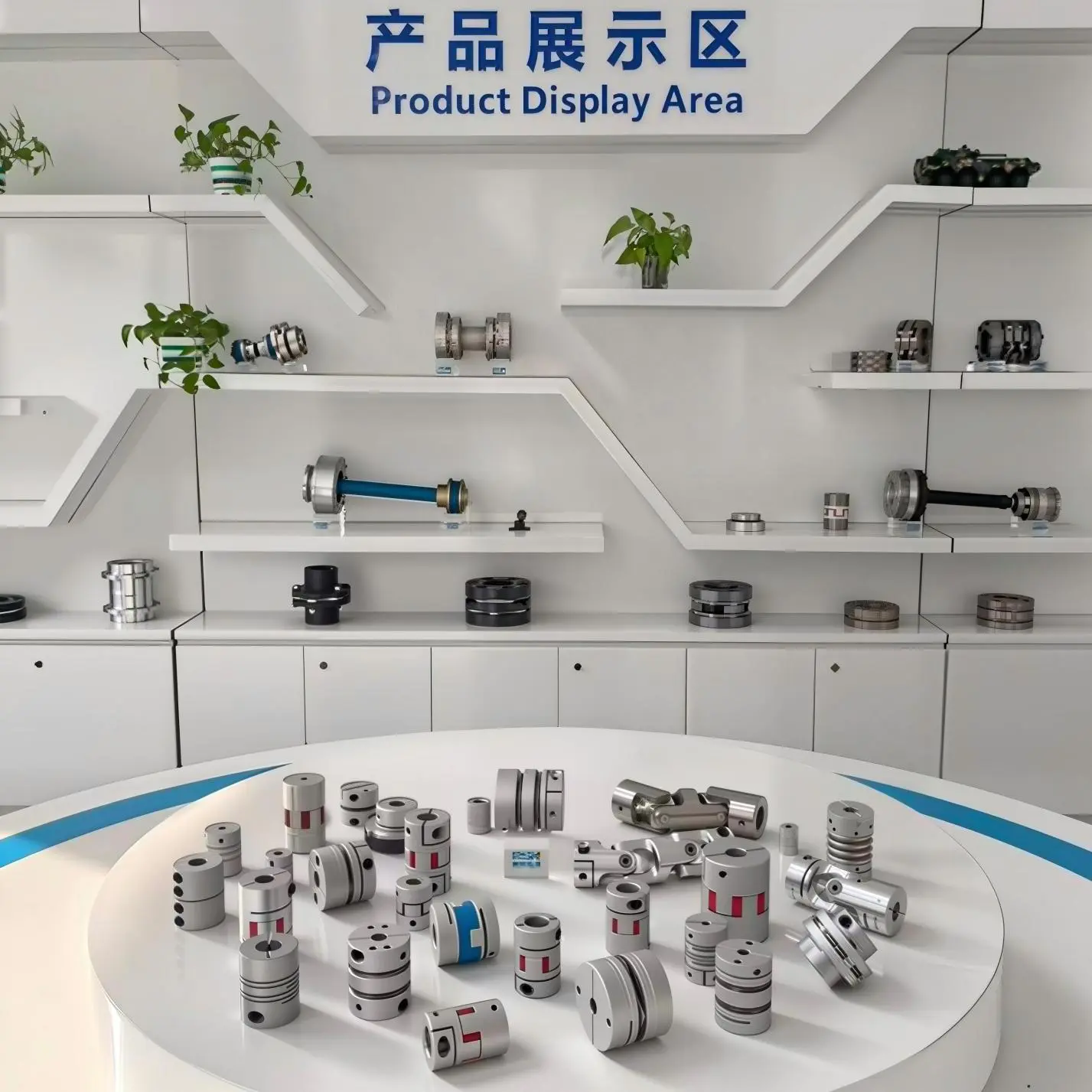
中文简体Couplings are primarily divided into two main categories—rigid couplings and flexible couplings—based on whether they contain elastic elements internally. Simply put, rigid couplings are "hard connections" that require strict alignment between the two shafts, while flexible couplings are "soft connections" that can tolerate certain installation errors and operational deformations.
Rigid Couplings and Flexible Couplings
Couplings are primarily divided into rigid couplings and flexible couplings, depending on whether they contain elastic elements. Simply put, rigid couplings are "hard connections" that require strict shaft alignment, while flexible couplings are "soft connections" that can tolerate certain installation errors and operational deformations.
Below is a breakdown of the common types in each category.
Content
Rigid Couplings
Rigid couplings have a simple structure and transmit torque accurately, but they have no shock-absorbing or vibration-damping capabilities, nor can they compensate for relative shaft displacements. They require extremely high alignment between the two shafts; otherwise, significant additional loads will be generated.
Common rigid couplings include:
Sleeve Coupling (Muff Coupling): The simplest structure—a sleeve connects two shafts via keys or pins. It has a small radial size but is inconvenient to assemble and disassemble.
Flange Coupling (Rigid Flange Coupling): The most widely used type. Two flanged half-couplings are connected by bolts, capable of transmitting large torque, but requiring very high shaft alignment.
Clamp Coupling (Split Muff Coupling): Composed of two split halves clamped around the shafts with bolts. Its main advantage is that shafts do not need to move axially during installation or removal.
Flexible Couplings
Flexible couplings can compensate for relative shaft displacements (such as radial, axial, and angular misalignments). They are further divided into two subcategories:
1. Flexible Couplings Without Elastic Elements
These couplings provide misalignment compensation but have no shock-absorbing or vibration-damping functions. They are commonly used in low-speed, heavy-load applications where misalignment compensation is needed but cushioning is not.
Gear Coupling: Consists of internal and external gears with equal tooth counts meshing together. It compensates for combined misalignments and has high load capacity, widely used in high-speed, heavy-load drives.
Universal Coupling (Hooke's Joint): Allows large angular misalignment (up to 45°), commonly used in automobiles, rolling mills, and other drives with intersecting axes.
Slider Coupling (Oldham Coupling): Uses an intermediate slider that moves in grooves on both hubs to compensate for radial misalignment. Suitable for low-speed applications.
Chain Coupling: Uses a chain to connect two sprocket-type half-couplings. Simple structure, allows radial misalignment, but not recommended for high speed or frequent forward/reverse operation.
2. Flexible Couplings With Elastic Elements (Often called Elastic Couplings)
These contain elastic elements made of rubber, nylon, or metal springs. In addition to misalignment compensation, they provide excellent shock absorption and vibration damping, protecting equipment from impact and vibration. Although their torque capacity is generally lower than those without elastic elements, they are very widely used.
Spider Coupling (Jaw Coupling): Uses a spider-shaped elastic insert to transmit torque. Compact structure with good vibration damping.
Pin-and-Bushing Coupling (Elastic Pin Coupling): Pins are fitted with elastic sleeves (rubber rings) that deform to absorb shock and compensate for misalignment.
Tire Coupling: The elastic element resembles a tire, capable of withstanding large radial and angular misalignments with strong damping ability.
Disc Coupling (Diaphragm Coupling): Uses metal diaphragms as elastic elements. No lubrication required, compensates misalignment well, and has good damping. Often used in high-speed, high-precision applications.
Spring Coupling (Grid Coupling): Uses a serpentine spring strip embedded in the teeth of two hubs to transmit torque. High load capacity and good damping effect.
How to Choose?
The key to selection is understanding your operating conditions:
If shaft alignment precision is very high, loads are steady with no impact, and you need a simple, low-cost solution → choose rigid couplings (e.g., flange coupling).
If shafts are difficult to align precisely or there is thermal expansion/contraction deformation → prioritize flexible couplings without elastic elements (e.g., gear coupling).
If there are shocks, vibrations, frequent start/stop, or frequent forward/reverse operation → choose flexible couplings with elastic elements (e.g., spider coupling or disc coupling).
If you're willing to share more details about your specific application (e.g., what equipment is being connected, speed, load conditions), I can offer more tailored selection advice.
 Previous