Plunge-Capable CVJ Architecture and What It Solves in Real Driveline Layouts
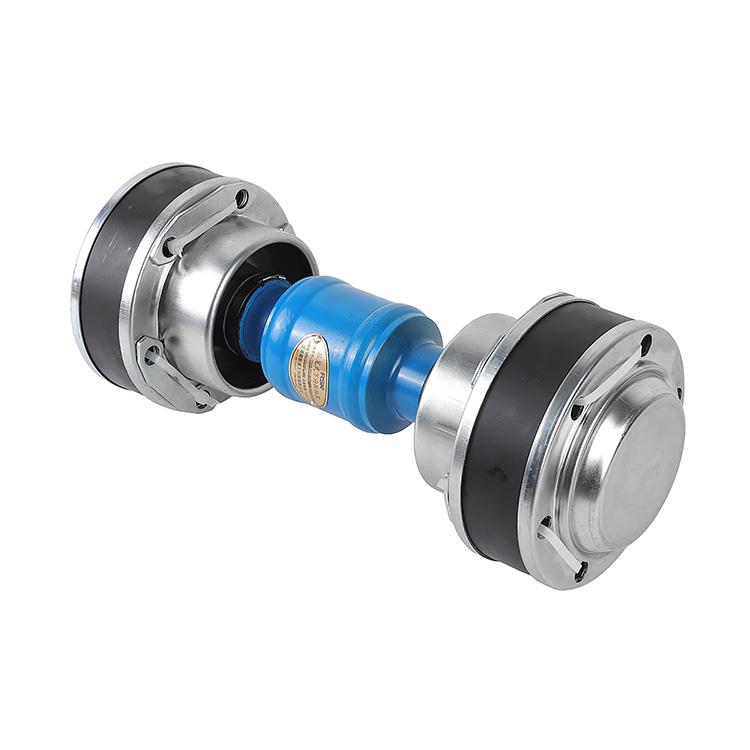
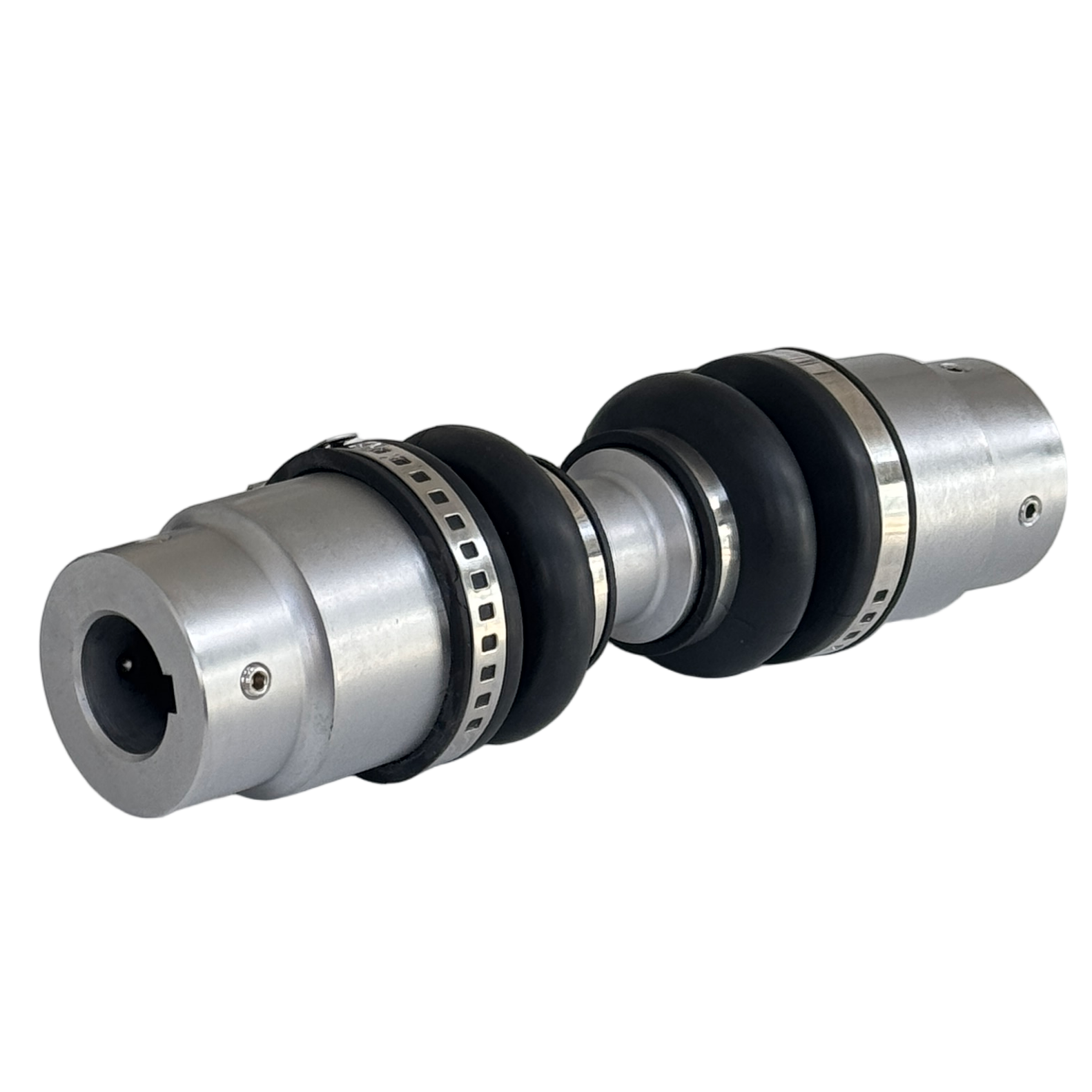
In sliding type CV joints, the outer race ball tracks are parallel to the joint axis, enabling relative axial movement between the inner and outer components while still transmitting torque and operating at an angle. In practical driveline packaging, this “in-joint plunge” is useful when the installation mounting distance cannot be perfectly controlled, or when the suspension travel introduces length variation that would otherwise demand a separate sliding spline.
For bulk buyers, the core takeaway is system-level: relocating plunge into the CVJ can reduce interfaces, shorten tolerance stacks, and simplify assembly validation. From our side, we design these joints with manufacturing consistency in mind, so the plunge behavior remains stable across production batches without requiring special intermediate shaft treatments.
Axial Vibration Absorption: When Lower Sliding Friction Matters Most
Axial vibration in a driveline is often easier to absorb when the length-compensation mechanism has low resistance. With sliding type CVJs, the smaller plunge friction means axial inputs can be dissipated with less force, which can help reduce the transmission of axial pulsation into adjacent components.
Where buyers typically see benefits
- Systems sensitive to NVH where spline “stiction” is a known contributor.
- Layouts with frequent suspension travel or thermal length changes.
- Applications where improving smooth plunge response is preferable to increasing damping elsewhere.
We routinely validate plunge smoothness using dynamic testing approaches aligned with real operating torque conditions, because a “no-load smooth” joint is not sufficient for most industrial buyers.
Eliminating Slide Splines on Intermediate Shafts: Design and Procurement Effects
When axial expansion and mounting distance adjustment are achieved inside the CVJ, the intermediate shaft can often be produced without slide splines. This affects both engineering and sourcing: fewer specialized machining steps, fewer wear interfaces, and fewer lubrication and sealing complexities associated with exposed spline movement.
| Design Item |
Slide Spline Arrangement |
Sliding Type CVJ Plunge Arrangement |
| Length compensation location |
Spline interface on shaft |
Inside CV joint |
| Friction behavior under torque |
Often higher sliding friction |
Lower expansion-induced friction via rolling motion |
| Manufacturing focus |
Spline precision + surface treatment |
Race geometry + heat treatment + dynamic validation |
| Assembly tolerance stack |
More interfaces to control |
Potentially fewer interfaces to control |
Comparison of where length compensation occurs and how it impacts friction behavior and manufacturing focus.
Operating Angle vs. Plunge: How to Avoid Over-Constraining the Joint
Sliding type CVJs are often selected when a driveline must accommodate both angle and axial movement. A practical design pitfall is over-constraining the system by assuming the joint can deliver maximum plunge at maximum angle indefinitely. In reality, angle and plunge share internal kinematic “room,” and aggressive combinations can raise internal contact stress, heat, and grease shear.
Constructive selection guidance used in procurement specs
- Specify the required angle envelope separately from the required plunge stroke, then validate the combined worst-case point.
- Include duty-cycle notes (continuous vs. intermittent angle) so the joint’s heat treatment and lubrication can be matched properly.
- Treat peak torque at large articulation as a distinct condition; it often governs fatigue and track durability more than steady-state torque.
We support buyers by translating these envelopes into manufacturable specifications, backed by dimensional measurement, physical/chemical verification, and dynamic testing—so the joint you approve is the joint you receive in volume.
Heat Treatment and Track Durability: What to Request Beyond “Hardness”
For ball-track components (outer race, inner ring), durability is not governed by a single hardness value alone. In bulk sourcing, it is more constructive to request heat-treatment outcomes that correlate with rolling-contact fatigue and impact tolerance, especially where plunge occurs under torque.
Practical checkpoints in supplier qualification
- Confirm consistent case depth or effective hardened layer appropriate to the race geometry and load zone.
- Require microstructure verification (not just hardness) to reduce scatter in fatigue life.
- Ask for dynamic test correlation when possible: track durability is ultimately a system behavior, not a single material number.
Our one-stop processing chain—precision manufacturing, controlled heat treatment, and complete inspection—lets us control these variables tightly, which is why many overseas buyers keep us on their approved vendor lists for long-term programs.
Grease, Sealing, and Plunge Consistency: Reducing Variability Over Service Life
In plunge-capable sliding type CV joints, grease behavior can influence plunge smoothness and heat. A joint that plunges smoothly at the start of life can become less consistent if grease is not matched to the shear conditions of rolling plus axial movement. For buyers, this is best handled as a specification conversation rather than an afterthought.
What to align in your technical requirements
- Temperature range and oxidation stability appropriate to your duty cycle.
- Compatibility with boot materials and sealing approach to maintain grease retention.
- Plunge smoothness criteria under torque (define acceptable force variation rather than subjective “feel”).
From our experience shipping to Europe, America, Russia, the Middle East, and India, aligning lubrication and sealing requirements early is one of the fastest ways to stabilize field performance while keeping the bill of process under control.
Installation Tolerance Strategy: Using Plunge to Simplify Mounting Distance Control
Bulk programs often struggle with mounting distance scatter across vehicle frames, gearboxes, or driven equipment variants. Sliding type CVJs can absorb a larger length variation because they combine plunge and operating angle capability in one assembly. The constructive approach is to convert that capability into a clear tolerance strategy.
Recommended approach used in production line planning
- Define nominal mounting length and expected min/max stack-up, including thermal growth.
- Set the joint’s mid-stroke plunge position at nominal build to preserve margin in both directions.
- Verify that at extreme suspension positions, the joint is not forced near stroke end under peak torque.
When buyers share target envelopes early, I can usually recommend a joint configuration that meets torque and plunge needs with minimal rework—this is where a capable supplier’s design and testing depth pays back quickly.







 English
 русский
 中文简体
中文简体