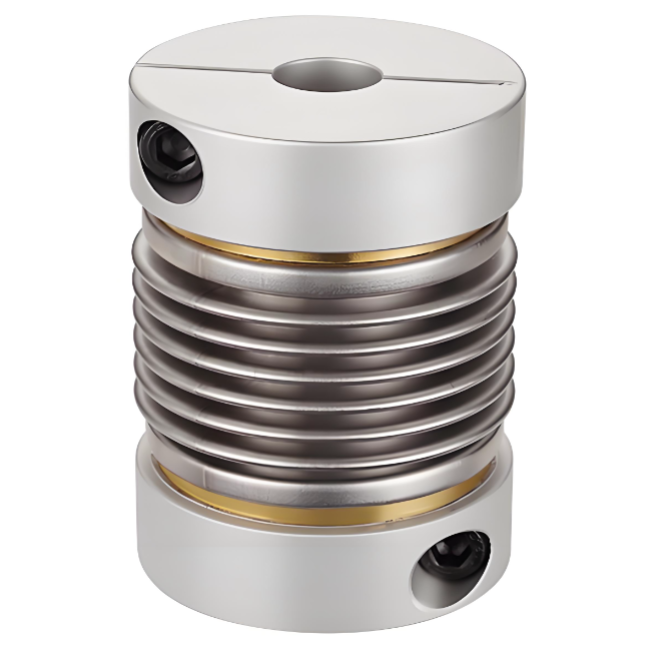
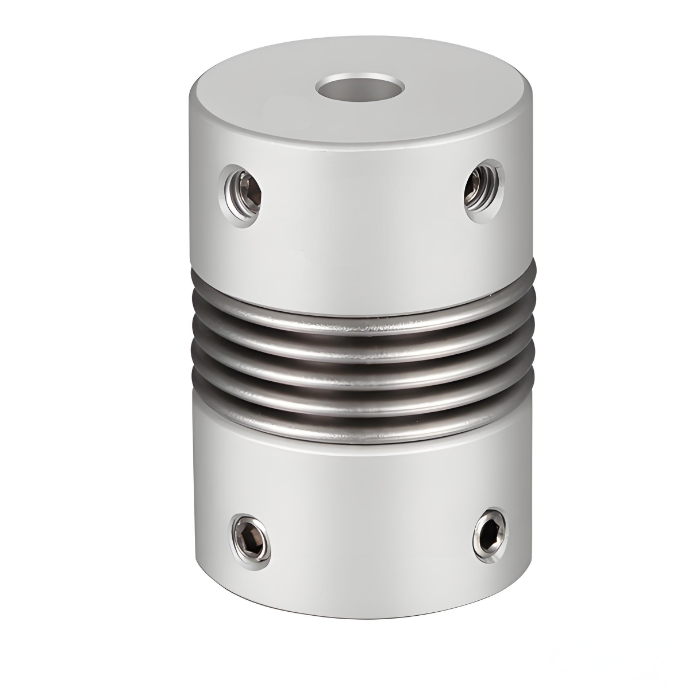
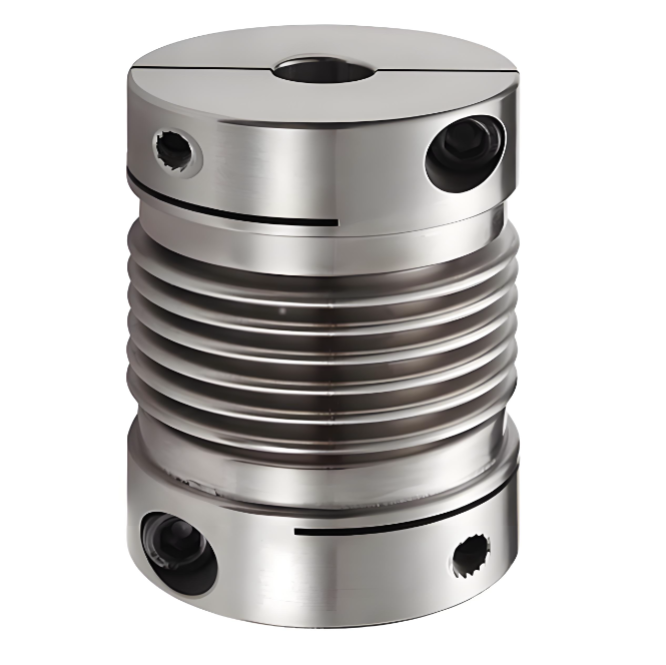
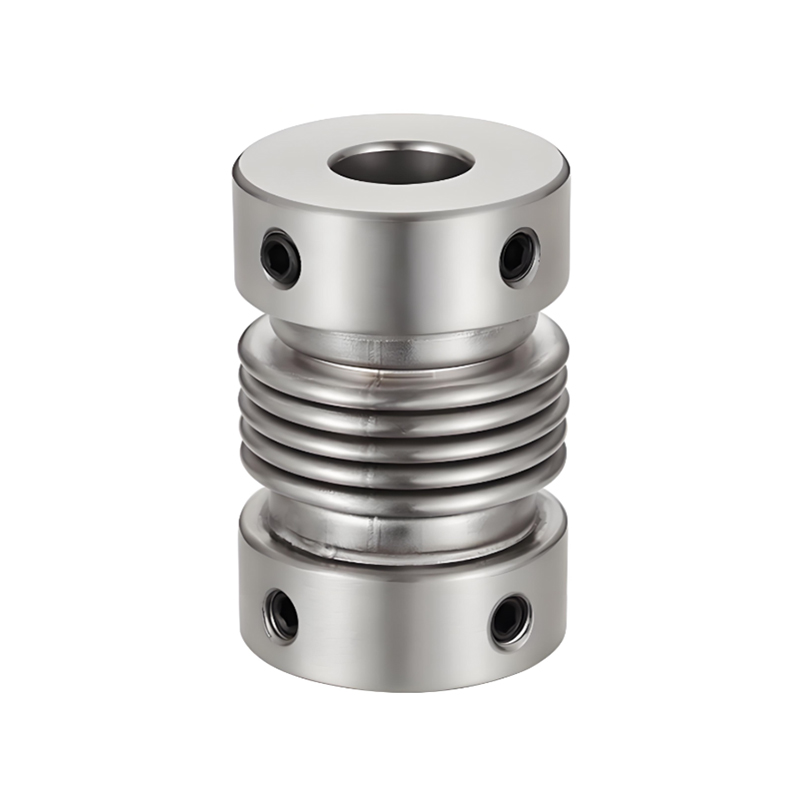
A bellows coupling is a precision mechanical device connecting rotating shafts, using a flexible, thin-walled metal bellows to transmit torque while compensating for angular, radial, and axial shaft misalignment without backlash, making them ideal for high-accuracy motion control, servo systems, and encoders. They offer high torsional stiffness, low inertia, and wear-free operation, often featuring aluminum hubs and stainless steel bellows for responsive, precise performance.
Key Features & Function:
Torque Transmission: Connects shafts to transfer power with high torsional rigidity.
Misalignment Compensation: Flexes to absorb small angular, radial, and axial misalignments between shafts.
Zero Backlash: The bellows design ensures precise positioning without lost motion, crucial for accuracy.
Low Inertia: Lightweight construction, often with aluminum hubs, allows for quick acceleration and responsiveness.
High Performance: Suitable for high speeds and dynamic applications, with characteristics tunable by bellows design (e.g., number of convolutions).
Typical Applications:
Servo motor connections
Encoder drives
Actuators (e.g., ball screw drives)
Robotics and automation
Construction:
Hubs: Aluminum or steel, connecting to shafts via set screws, clamps, or keyways.
Bellows: Made from high-strength stainless steel, with single or multiple walls.





 English
 русский