






 English
 русский
RSK-KC Chain Couplings for Power Transmission Easy Installation Lower Alignment Requirements
The KC Chain Coupling, fully known as the "Roller Chain Coupling," is a mechanical element that transmits power through the meshing of double-strand o...
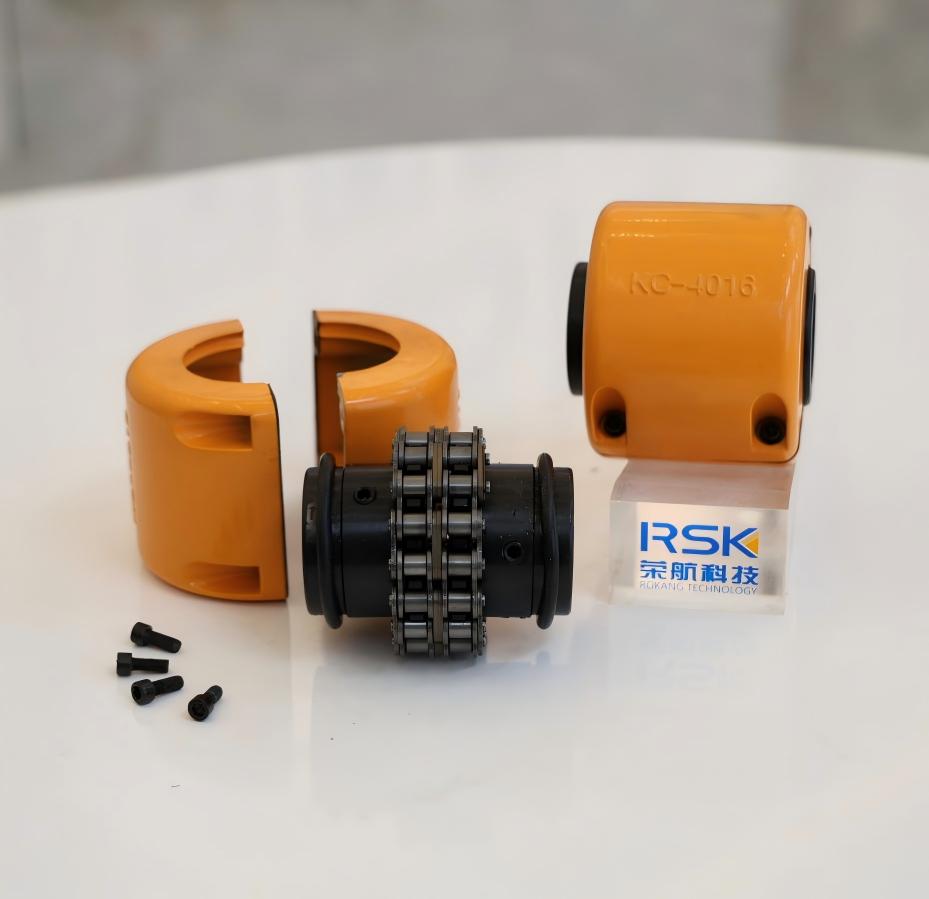
The KC Chain Coupling, fully known as the "Roller Chain Coupling," is a mechanical element that transmits power through the meshing of double-strand o...
A chain coupling is a robust power transmission device using two sprockets and a double-strand roller chain to connect shafts, allowing for easy connection/disconnection and accommodating significant shaft misalignment while transmitting torque, suitable for various industrial uses, especially when lubrication is maintained for high speeds.
Components
Sprockets: Two sprockets with teeth that mesh with the chain, often hardened for durability.
Roller Chain: A strong, double-strand roller chain wraps around both sprockets.
Split Case (Optional): A two-part housing that covers the coupling for protection and lubrication, often with O-rings to retain grease.
Key Features & Benefits
Easy Connection: A single pin allows for quick assembly and disassembly, reducing downtime.
High Durability: Torque is shared between the chain and hardened sprocket teeth for robust performance.
Misalignment Compensation: Internal clearances absorb parallel, angular, and axial misalignment between shafts.
Compact & Powerful: Offers high torque capacity for its size.
Versatile: Available in various materials (steel, resin) for different environments, from general power transmission to dirty or corrosive conditions.
Usage Considerations
Lubrication is Crucial: Requires adequate grease within the cover for high-speed operation and long life; poor lubrication can lead to chain breakage.
Installation: Proper alignment of sprockets and shafts is important for optimal performance.


What Are Flexible Couplings and Why Are They Essential in Power Transmission? Flexible couplings are mechanical devices that connect two rotating shafts — typically a driver (motor, engine, or turbine) and a driven mach...
READ MOREA chain coupling connects two rotating shafts by linking their sprockets with a short section of roller chain, transmitting torque mechanically while accommodating small amounts of shaft misalignment. For industrial pow...
READ MOREServo Couplings: The Critical Link Between Motor and Load A servo coupling is a mechanical element that connects the output shaft of a servo motor to a driven component — a ball screw, encoder, gear, or load shaft — whi...
READ MOREThe Operational Advantage of Serpentine Spring Couplings A serpentine spring coupling is the optimal solution for high-torque, heavy-duty industrial applications requiring precise alignment compensation and shock absorp...
READ MOREChain couplings are widely used mechanical components designed to transmit torque between two rotating shafts using sprockets and a roller chain. Known for their simple structure and strong load-carrying ability, chain couplings are commonly applied in industrial power transmission systems where durability, ease of maintenance, and misalignment tolerance are required. Their design makes them suitable for both standard operating conditions and demanding industrial environments.
From conveyors and mixers to pumps and material handling equipment, chain couplings provide a practical solution for connecting shafts while maintaining reliable torque transfer.
A typical chain coupling consists of two sprockets mounted on the driving and driven shafts, connected by a double-strand roller chain. The sprocket teeth engage directly with the chain, forming the torque transmission path between shafts.
In many designs, a split protective cover is installed around the coupling. This cover helps retain lubricant, shields the chain from dust and debris, and improves operational safety in industrial settings.
Torque in a chain coupling is transmitted through the engagement between the roller chain and the sprocket teeth. Load is distributed across multiple chain links and teeth, allowing the coupling to handle relatively high torque for its compact size.
Because the chain operates with internal clearances, the coupling can accommodate shaft movement while maintaining continuous power transmission. This makes chain couplings suitable for applications with fluctuating loads or less rigid mounting conditions.
One of the practical advantages of chain couplings is their ability to tolerate shaft misalignment. The flexibility provided by the chain and sprocket engagement allows the coupling to absorb several types of misalignment without immediate failure.
Although chain couplings can tolerate misalignment, proper alignment during installation helps extend chain and sprocket service life.
Chain couplings are valued for their straightforward assembly and disassembly. The roller chain can typically be installed or removed by disconnecting a single pin, which reduces downtime during maintenance or equipment replacement.
This simple handling makes chain couplings suitable for applications where frequent inspection or component changes are expected, such as production lines or material handling systems.
Lubrication plays a critical role in the performance and lifespan of chain couplings. Adequate grease reduces friction between the chain rollers and sprocket teeth, minimizing wear and heat generation during operation.
For higher-speed applications, a sealed cover with grease retention features is commonly used. Insufficient lubrication can lead to accelerated chain wear or even chain breakage, affecting system reliability.
Chain couplings are available in different materials and configurations to suit various operating environments. Standard steel sprockets and chains are widely used in general industrial machinery due to their strength and durability.
For corrosive or contaminated environments, alternative materials or surface treatments may be selected to improve resistance to moisture, chemicals, or abrasive particles. These variations expand the usability of chain couplings across different industries.
Chain couplings are commonly applied in machinery where reliable torque transmission and ease of service are required.
The reliability of a chain coupling depends on accurate sprocket machining, proper heat treatment, and consistent chain quality. Dimensional accuracy and surface hardness directly affect load distribution and wear resistance.
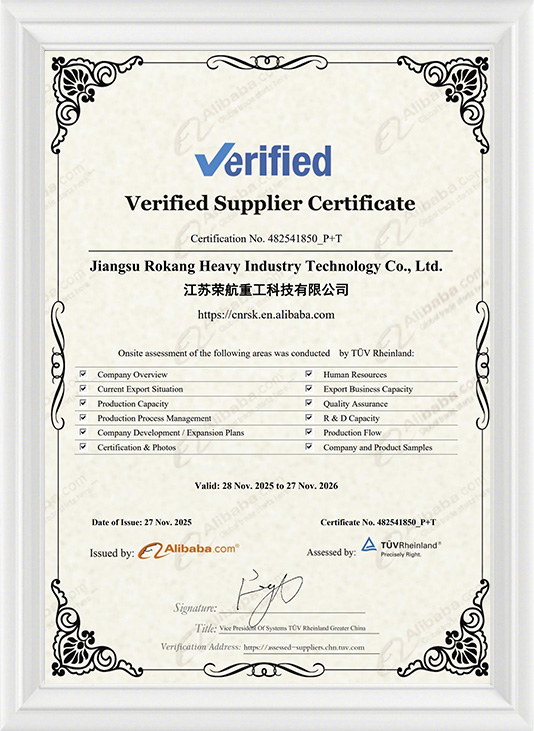
With experience in heavy-duty power transmission components, Jiangsu Rokang Heavy Industry Technology Co., Ltd. applies its manufacturing and engineering capabilities to provide chain coupling solutions suited to a wide range of industrial operating conditions.
Chain couplings offer a durable and practical solution for industrial power transmission. Through their simple structure, high torque capacity, misalignment tolerance, and ease of maintenance, they remain a reliable choice for many drive systems. With proper installation and lubrication, chain couplings can deliver stable performance and long service life in diverse industrial applications.
Get in Touch
Your email address will not be published. Required fields are marked *
Have a project in mind? Contact with us!
We are happy to answer your questions. Please fill out this form and one of our professional team will get back to you as soon as possible.

A professional manufacturer specializing in the production of various types of couplings! Chain Couplings Manufacturers in China.

