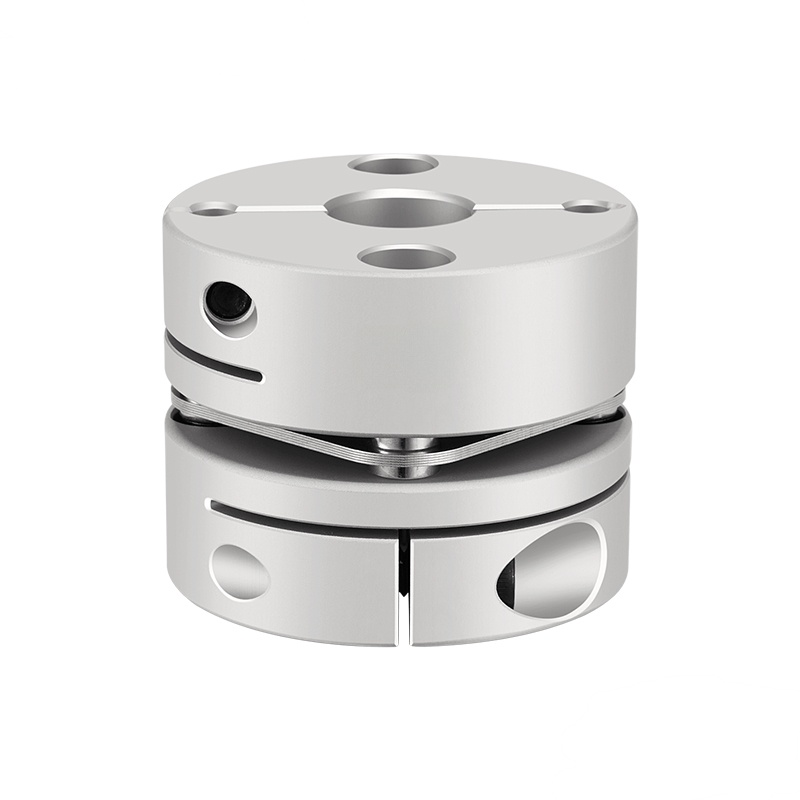
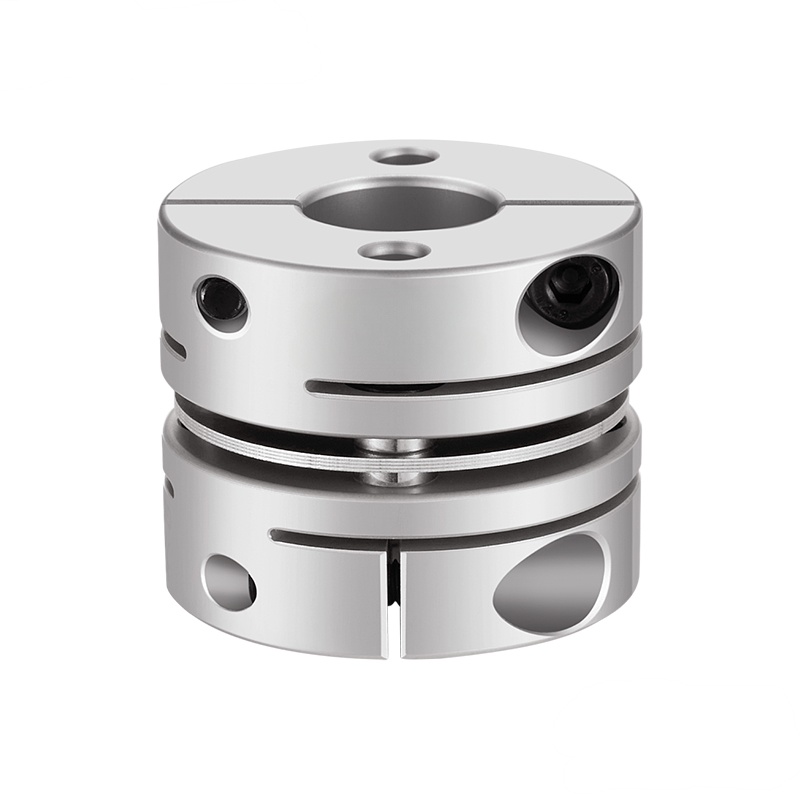
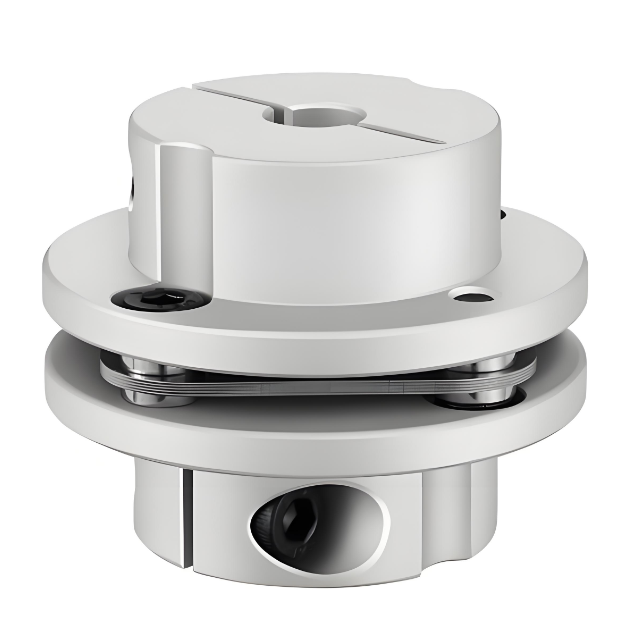
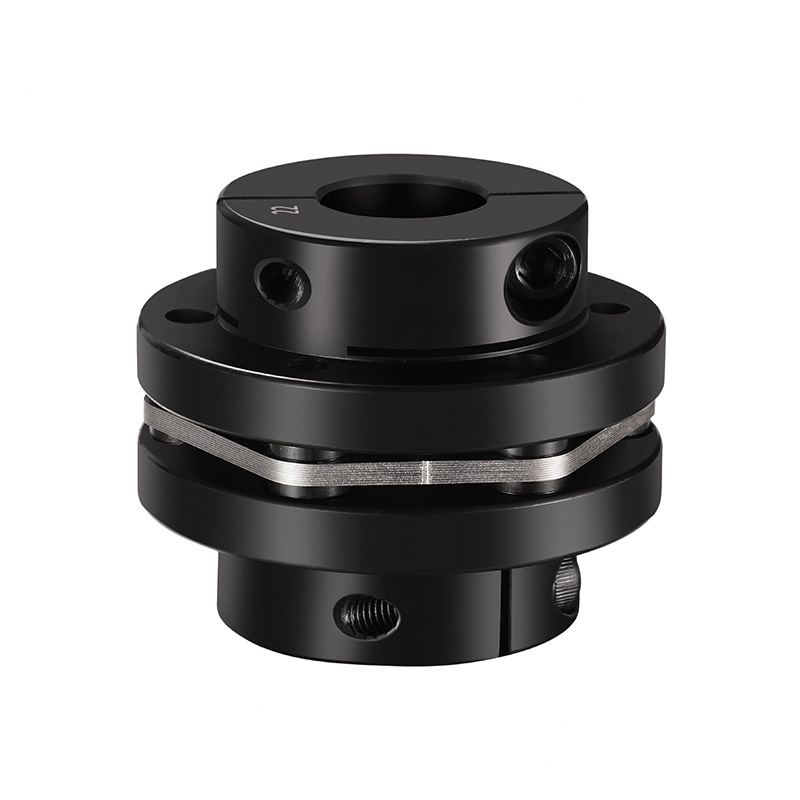
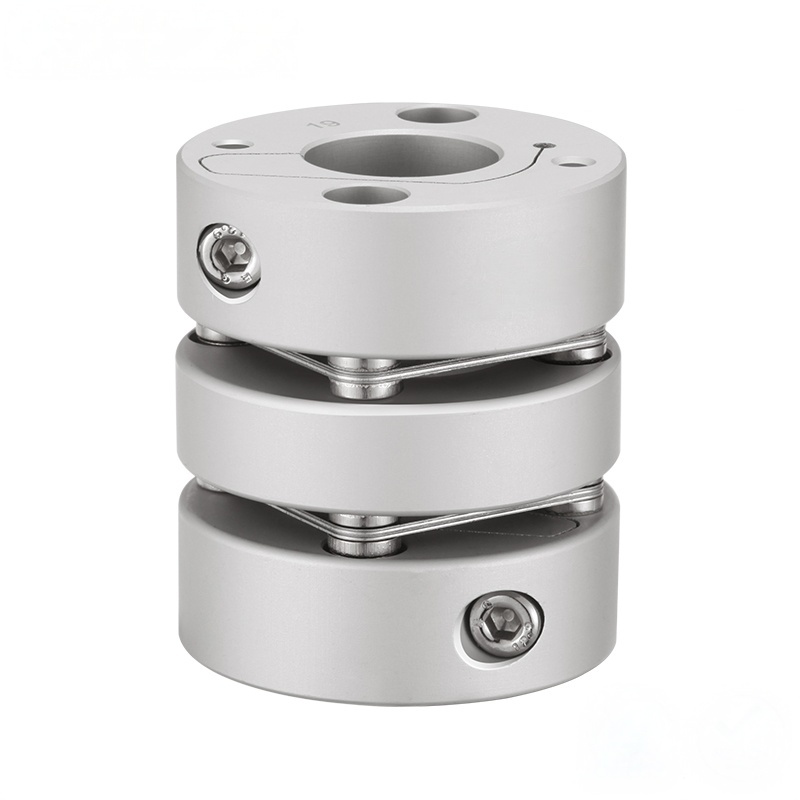
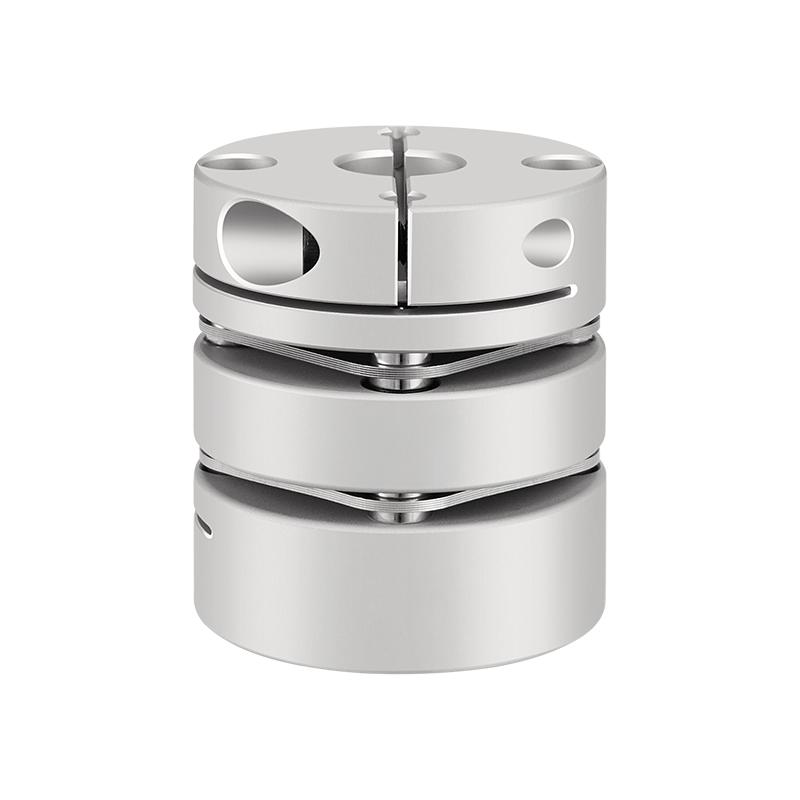
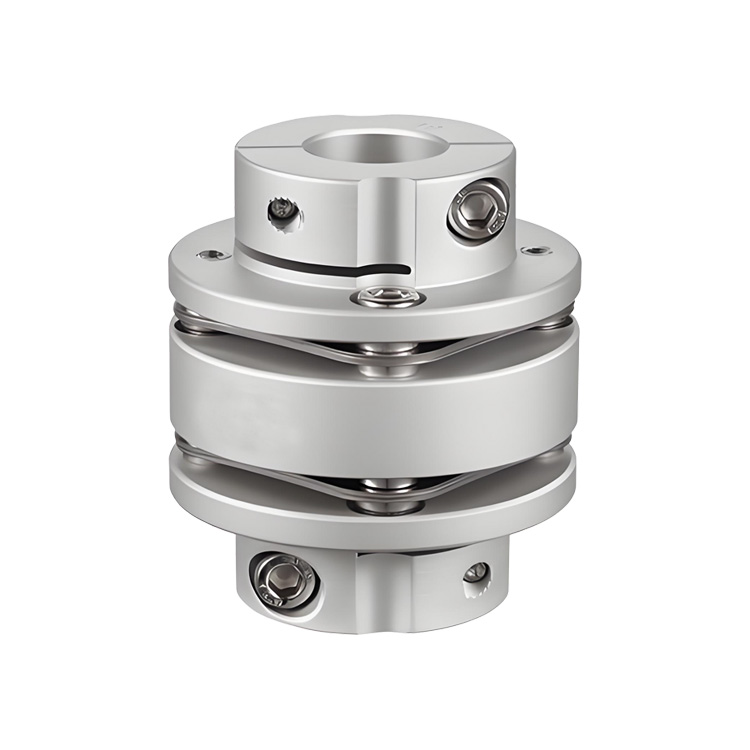
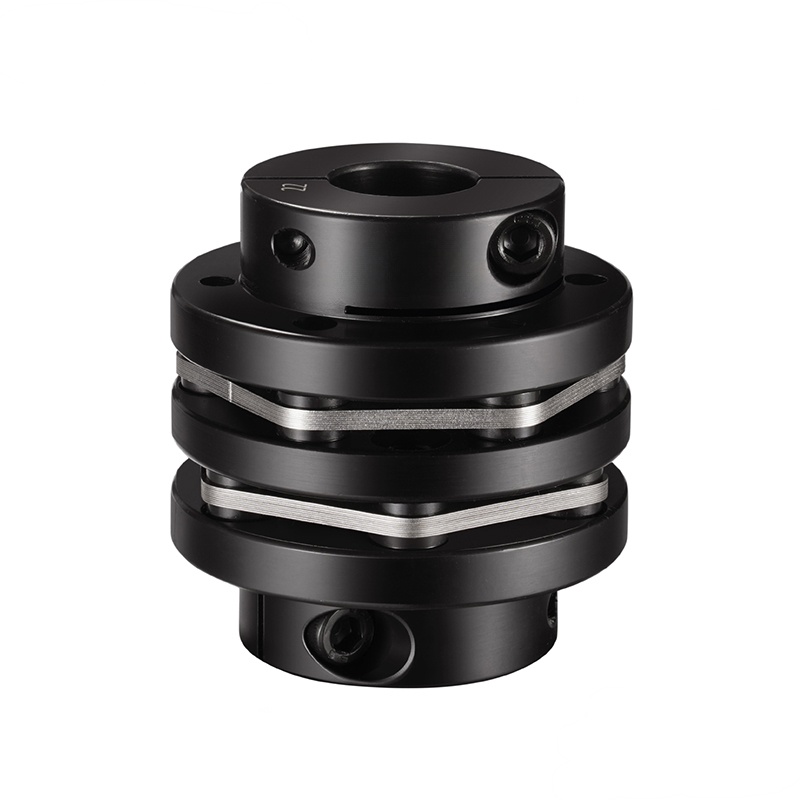
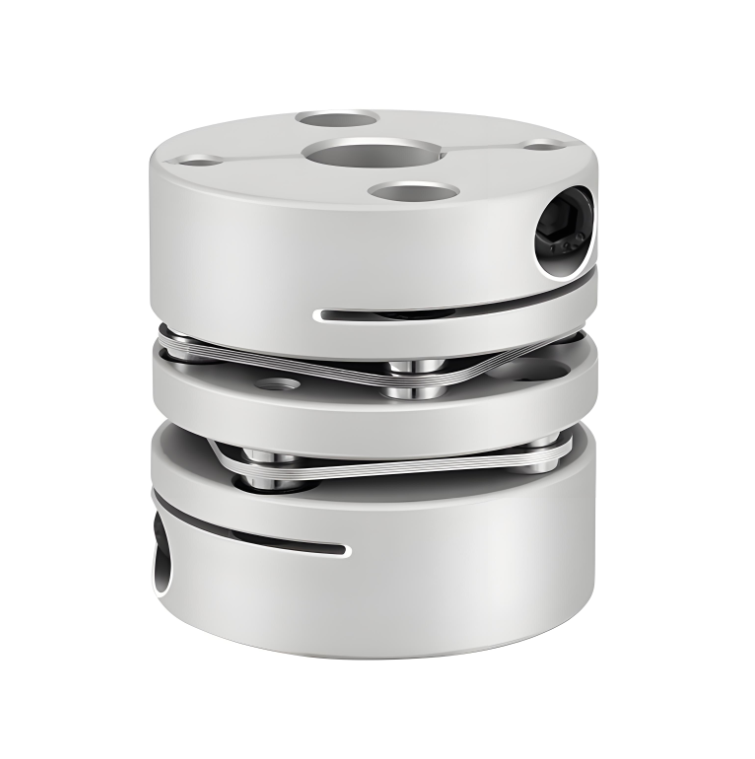
Servo motor diaphragm couplings are specialized power transmission components designed to connect servo motors with driven elements such as ball screws, linear actuators, or precision gear units. Their primary role is to transmit torque with high accuracy while maintaining zero backlash and stable torsional behavior. In high-performance servo systems, the coupling directly influences positioning accuracy, response speed, and long-term operational stability.
Compared with general-purpose flexible couplings, diaphragm couplings are selected where precision and efficiency are critical. Their metal-based elastic structure supports consistent motion control in dynamic automation environments.
Structural Design of Servo Motor Diaphragm Couplings
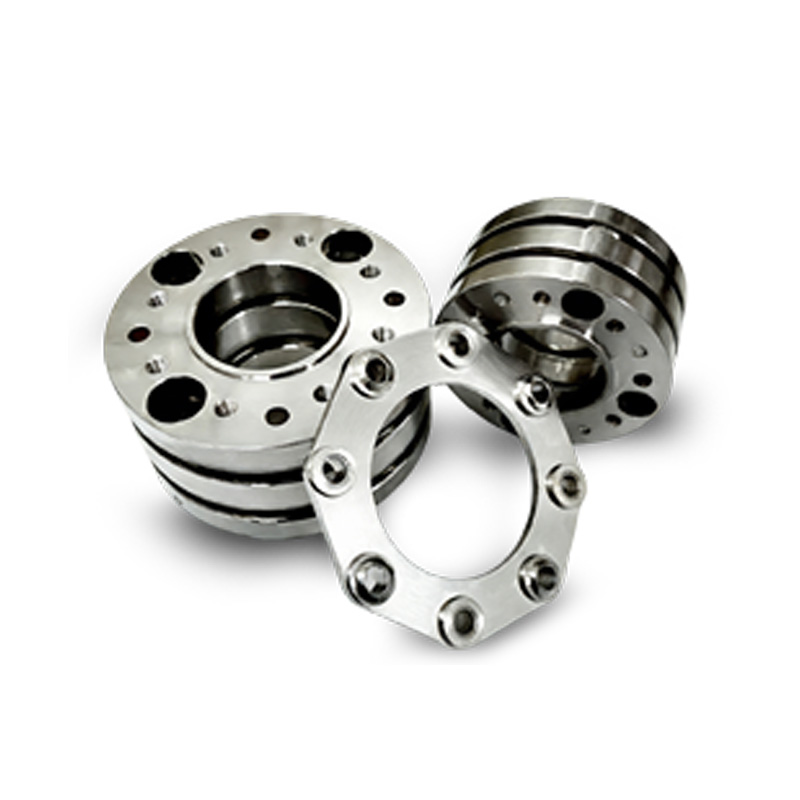
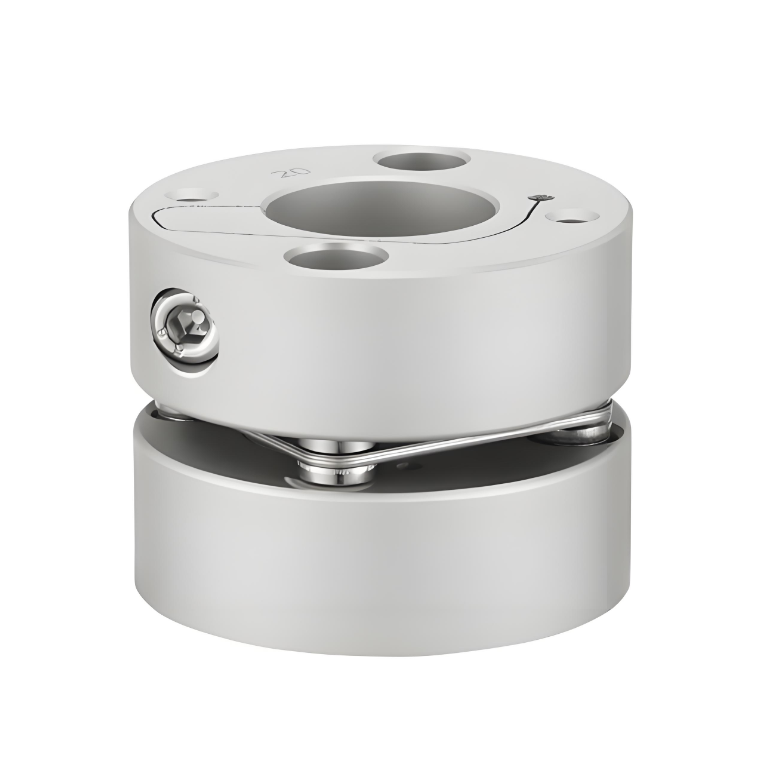
A servo motor diaphragm coupling typically consists of two hubs connected by one or more thin metallic diaphragms. These diaphragms are manufactured as flexible plates or disc-like elements and are positioned between the motor shaft and the driven shaft. The hubs are mounted directly onto the shafts using clamping, keyway, or other precision fastening methods.
The diaphragm elements are designed to flex elastically under load while remaining torsionally rigid. This balance between flexibility and stiffness allows the coupling to transmit torque accurately while accommodating minor shaft misalignment.
Torque Transmission Through Elastic Metal Diaphragms
In a servo motor diaphragm coupling, torque flows from the motor shaft into the first hub, across the diaphragm elements, and into the hub connected to the driven load. The transmission path relies on elastic deformation of the diaphragm rather than sliding or rolling contact.
Because torque is transferred through a continuous metallic structure, the coupling exhibits high torsional rigidity. This characteristic supports accurate torque response and minimizes angular deflection during rapid acceleration or load changes.
Misalignment Compensation Without Bearing Stress
Minor misalignment between servo motor shafts and driven components is unavoidable in practical installations. Servo motor diaphragm couplings compensate for these deviations through controlled flexing of the diaphragm elements.
- Axial displacement caused by thermal expansion
- Angular misalignment from mounting tolerances
- Small parallel shaft offsets
By absorbing these movements internally, the coupling reduces the transfer of unwanted forces to motor bearings and driven equipment, supporting longer service life.
Zero Backlash and Motion Accuracy
Zero backlash is essential in servo-driven systems where motion commands must be translated directly into mechanical movement. Many servo motor diaphragm couplings achieve zero backlash through precision-machined hubs, tightly controlled diaphragm geometry, and secure joining methods such as bolted or welded connections.
This rigid, play-free connection helps maintain precise synchronization between the servo motor and the driven axis, improving repeatability and positioning accuracy in closed-loop control systems.
Low Inertia and High Dynamic Performance
Servo motor diaphragm couplings are typically designed with low mass and compact geometry. Reduced moment of inertia limits the load reflected to the motor, allowing faster acceleration and deceleration.
In high-speed automation and robotics, this low inertia contributes to shorter cycle times and improved energy efficiency while maintaining stable dynamic behavior.
Maintenance-Free Operation and Service Reliability
Because diaphragm couplings operate without sliding contact, they do not require lubrication. This maintenance-free characteristic reduces operating costs and simplifies system upkeep, particularly in clean or enclosed environments.
The all-metal diaphragm structure also supports long service life under cyclic loading, provided operating limits are respected. In some designs, the diaphragm can be engineered to fail in a predictable manner under extreme overload, offering a degree of mechanical protection to connected equipment.
Application Areas in Servo-Driven Equipment
Servo motor diaphragm couplings are widely used in applications that demand precise motion control and stable torque transmission.
- CNC machine tool feed axes and positioning systems
- Industrial robots and automated assembly lines
- Semiconductor manufacturing and inspection equipment
- High-speed packaging and labeling machinery
Engineering Capability Behind Diaphragm Coupling Performance
Achieving reliable performance in servo motor diaphragm couplings requires precise material control, accurate machining, and strict quality inspection. Consistent diaphragm thickness, balanced geometry, and controlled assembly directly affect stiffness and fatigue life.
With experience in precision power transmission components and advanced coupling technologies, Jiangsu Rokang Heavy Industry Technology Co., Ltd. integrates its engineering know-how into the development of diaphragm couplings suited for high-accuracy servo systems across a range of industrial applications.
Conclusion
Servo motor diaphragm couplings provide a precise, efficient, and reliable connection between servo motors and driven components. Through zero backlash, high torsional rigidity, misalignment compensation, and maintenance-free operation, they support accurate motion control in modern automation systems. As servo technology continues to advance, diaphragm couplings remain an important element in achieving consistent performance and long-term system stability.







 English
 русский